Heritage saree checklist: Choose authentic handloom with confidence
TL;DR:
- A heritage saree is handwoven, region-specific, and made by traditional artisans.
- Verify authentic fibers, motifs, weaving methods, origin, and certification before purchasing.
- Proper care and storage ensure the longevity of genuine handloom heritage sarees.
Choosing a heritage saree from hundreds of options is not straightforward. Sellers use terms like “handloom” and “traditional” loosely, making it hard to separate genuine artisan work from factory-made imitations. A structured checklist removes that confusion. This guide covers what defines a true heritage saree, ten factors to verify before purchase, the most recognized regional styles across India, and how to care for your saree after buying. Each section gives you specific, actionable criteria so your next purchase reflects real craft and cultural value.
Table of Contents
- Understand what makes a saree ‘heritage’
- Heritage saree checklist: 10 factors before you buy
- Most popular heritage saree styles: A regional guide
- Care checklist: Preserving your heritage saree’s beauty
- Why a heritage saree is an investment in self and culture
- Shop authentic handloom sarees and traditional attire
- Frequently asked questions
Key Takeaways
| Point | Details |
|---|---|
| Authenticity first | Focus on handwoven craftsmanship and regional origins to identify true heritage sarees. |
| Follow the checklist | Evaluate fabric, design, provenance and sustainability before making a purchase. |
| Preservation matters | Gentle maintenance ensures your saree remains beautiful for generations. |
| Style with purpose | Choosing heritage sarees supports artisans, culture, and sustainable fashion. |
Understand what makes a saree ‘heritage’
A heritage saree is not simply an old or ornate garment. It is defined by three core attributes: it is handwoven, it carries region-specific patterns, and it originates from an identifiable artisan tradition. These three factors together separate a heritage piece from a decorative but mass-produced alternative.
Natural fibers are central to this definition. Silk, cotton, and wool sourced and processed using traditional methods form the base of most heritage weaves. Dyeing methods also matter. Natural dyes derived from plants, minerals, or insects produce colors that age gracefully. Synthetic dyes applied industrially do not carry the same depth or longevity.
Weaving method is equally important. Handloom weaving is done on a manual loom, where each thread is placed with intention. This process is slow. A single Kanjeevaram saree can take weeks to complete. Machine-made sarees are produced in hours. The difference in output is visible, but it requires a trained eye to spot.
Authentic heritage saree craftsmanship includes intentional irregularities. Slight variations in thread tension, minor asymmetries in motifs, and small inconsistencies in border width are all signs of handwork. Handloom sarees feature unique imperfections as a hallmark of craftsmanship. A perfectly uniform pattern across every inch of a saree is a strong indicator of machine production.
Key elements that define a heritage saree:
- Handwoven on a traditional manual loom
- Uses natural or region-specific fibers
- Carries motifs tied to a specific geographic tradition
- Produced by trained artisans within a recognized weaving community
- Shows minor, natural irregularities from the handweaving process
- Dyed using traditional or natural methods
The silk saree symbolism attached to many heritage styles also carries social and ritual meaning. Certain patterns are worn only at weddings. Others mark specific festivals or community identities. Understanding this context adds another layer to identifying a genuine piece.
Pro Tip: Run your fingers along the border of any saree you are considering. A handwoven border will feel slightly raised and textured. A printed or machine-woven border will feel flat and uniform.
Heritage saree checklist: 10 factors before you buy
With a clear definition established, the following checklist provides practical criteria for evaluating any saree before purchase. Use it as a reference at every stage of your buying process.
- Fabric type. Confirm the fiber content. Ask for a burn test if possible. Silk burns slowly and smells like burnt hair. Synthetic fibers melt and smell chemical.
- Motif authenticity. Research the motifs associated with the style you are buying. A genuine Sambalpuri saree uses ikat patterns tied to Odisha’s weaving tradition. Generic floral prints are not region-specific.
- Weaving technique. Ask the seller to explain the weaving method. Handloom, pit loom, and jacquard loom produce different results. Handloom is the standard for heritage classification.
- Certification. Look for a Handloom Mark or Geographical Indication (GI) tag. These are government-backed certifications that verify origin and method.
- Place of origin. A Banarasi saree should come from Varanasi. A Paithani from Yeola or Paithan. Provenance matters and should be verifiable.
- Color fastness. Rub a damp white cloth on the saree fabric. Significant color transfer indicates low-quality dye. Heritage sarees hold color well.
- Price cues. Handmade saree value reflects labor, materials, and skill. A price that seems too low for a claimed handloom piece is a warning sign.
- Artisan or brand reputation. Research the seller. Established weavers, cooperatives, and brands with traceable supply chains are more reliable sources.
- Feel and drape test. A quality handloom saree drapes smoothly and holds its shape. Stiff or excessively shiny fabric often indicates synthetic blends.
- Sustainability indicators. Ask about the production process. Brands committed to fair wages, natural dyes, and responsible sourcing reflect genuine heritage values.
“Investing in handmade sarees preserves traditional skills and sustainable fashion.” The saree selection guide confirms that authenticity, fiber, design, and provenance are the four pillars of any reliable purchase decision.
For additional guidance on evaluating premium pieces, the luxury saree tips resource covers quality markers specific to high-value handloom sarees.
Pro Tip: Always ask where the saree was woven, not just where it was sold. A saree sold in Mumbai may have been woven in Varanasi or Kanchipuram. Origin determines authenticity.
Most popular heritage saree styles: A regional guide
Each Indian region specializes in unique handloom saree traditions. Knowing the key characteristics of each style helps you apply the checklist more effectively.
| Regional style | Key characteristics | Typical motifs | Sustainability markers |
|---|---|---|---|
| Banarasi | Silk with gold/silver zari | Floral, Mughal architecture | Artisan cooperatives, GI tag |
| Kanjeevaram | Heavy silk, contrasting border | Temple borders, checks | Natural silk, GI certified |
| Chanderi | Lightweight silk-cotton blend | Coins, floral, peacock | Handloom Mark, natural dyes |
| Sambalpuri | Ikat-dyed cotton or silk | Shankha, chakra, fish | Weaver cooperatives, GI tag |
| Paithani | Silk with tapestry weave | Peacock, lotus, vine | Handwoven, regional certification |
| Patola | Double ikat silk | Geometric, elephant, parrot | GI tag, family-run workshops |
Quick identification tips for each style:
- Banarasi: Look for a brocade texture and metallic thread woven into the body, not printed on top.
- Kanjeevaram: The border and body are woven separately and joined. Check the join line on the reverse side.
- Chanderi: Holds light and appears slightly translucent. Extremely lightweight for its size.
- Sambalpuri: The ikat pattern bleeds slightly at the edges of each motif. Sharp edges indicate machine printing.
- Paithani: The pallu features a tapestry-style peacock woven in contrasting silk thread.
- Patola: Both sides of the fabric look identical. Double ikat is one of the most labor-intensive techniques in Indian weaving.
Understanding silk in Indian culture provides additional context for why certain styles carry higher ritual and social significance. For those considering a heritage saree as a gift, the gifting heritage sarees guide outlines which styles are most appropriate for different occasions.
Care checklist: Preserving your heritage saree’s beauty
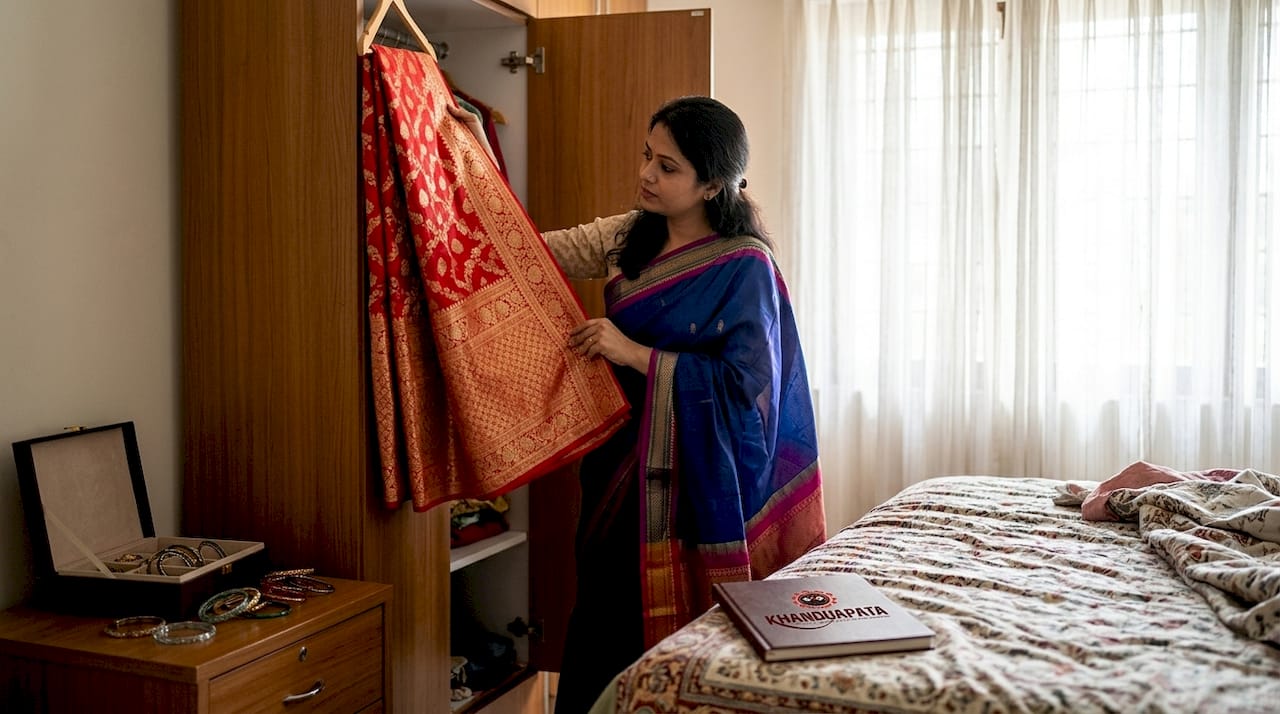
Purchasing a heritage saree is only the first step. Traditional sarees require gentle handling and careful storage to last generations. The following care checklist protects your investment over time.
- Dry clean only for silk sarees. Machine washing breaks down natural silk fibers. For cotton handlooms, hand wash in cold water with a mild, pH-neutral detergent.
- Air dry in shade. Direct sunlight fades natural dyes. Lay the saree flat or hang it in a shaded, ventilated space.
- Iron on low heat. Use a cloth barrier between the iron and the saree surface. High heat damages zari and weakens silk threads.
- Fold along different lines each time. Repeated folding along the same crease causes fabric stress and eventual tearing. Rotate your fold points.
- Store in cotton or muslin cloth. Plastic bags trap moisture and cause mildew. Cotton fabric allows the saree to breathe.
- Use natural insect repellents. Neem leaves, dried lavender, or cedar blocks protect against moths without chemical damage. Avoid naphthalene balls near silk.
- Air the saree every three to four months. Even stored sarees benefit from periodic airing to prevent moisture buildup and fabric degradation.
Understanding the saree craftsmanship guide helps you match care methods to the specific fiber and weave of your saree. A Chanderi cotton saree requires different handling than a Kanjeevaram silk.
For eco-friendly maintenance, use plant-based detergents and avoid chemical fabric softeners. These products strip natural dyes and alter the hand-feel of handloom fabric. The saree maintenance workflow provides a detailed process for each fabric type.
Pro Tip: If an older heritage saree shows signs of wear, contact the original weaving community or a specialist restorer. Many artisan cooperatives offer repair services that match the original thread and technique.
Why a heritage saree is an investment in self and culture
A heritage saree holds value beyond fabric and design. Each piece carries the accumulated skill of a weaving tradition that may span centuries. When that tradition disappears, it cannot be recreated from a factory template.
The checklist in this guide is not just a buying tool. It is a framework for making decisions that support artisan livelihoods. Every verified purchase directs income to weavers who practice methods that are genuinely at risk of being lost. Investing in handmade sarees sustains both the craft and the communities built around it.
There is also a personal dimension. A saree chosen with care and verified criteria becomes a garment you understand. You know its origin, its maker’s tradition, and the specific technique used to produce it. That knowledge changes how you wear it and how you preserve it. It shifts the saree from a purchase to a legacy item.
Using a structured checklist ensures that your saree is not just decorative. It is culturally grounded, sustainably sourced, and genuinely handmade.
Shop authentic handloom sarees and traditional attire
Khanduapata offers handwoven sarees and traditional attire rooted in the heritage of Lord Jagannath’s weaving tradition. Each piece in the collection is produced by skilled artisans using verified handloom methods and natural fibers.
The heritage saree collection includes options across silk, cotton, and blended weaves, each traceable to its regional origin. For those seeking a specific style, the Chanderi silk saree and the cotton suit for women reflect the same commitment to authentic craft. Every purchase supports the artisans and traditions that make Indian handloom a living heritage.
Frequently asked questions
How do I check if a saree is genuinely handloom?
Look for minor weaving irregularities, request a Handloom Mark or GI tag, and verify the seller’s sourcing. Handloom sarees feature unique imperfections that machine-made pieces do not replicate.
Which saree styles are considered heritage across India?
Each Indian region specializes in distinct handloom traditions. Banarasi, Kanjeevaram, Chanderi, Sambalpuri, Paithani, and Patola are among the most widely recognized heritage styles.
What is the best way to store a heritage saree for longevity?
Traditional sarees require careful storage in cotton or muslin cloth, with periodic airing every few months and natural insect repellents to prevent fabric damage.
Why do some heritage sarees cost so much more?
Handmade saree value reflects the labor-intensive production process, rare or natural materials, regional exclusivity, and the skilled artisan time required to complete each piece.