Silk in Indian tradition: heritage crafts and culture
India produces all four major silk types — Mulberry, Tussar, Eri, and Muga — generating nearly 38,913 metric tons in 2023-24 alone. Yet the numbers only tell part of the story. Silk in India is not simply a textile. It is present at birth ceremonies, weddings, temple offerings, and funerals. It marks social rank, regional identity, and spiritual devotion. This article examines how silk became central to Indian cultural life, which varieties define specific traditions, how iconic crafts like Banarasi and Kanchipuram sustain rural livelihoods, and what steps support the survival of these heritage practices today.
Table of Contents
- A tapestry of tradition: Silk in Indian history and rituals
- Silk types and where they shine: Mulberry, Tussar, Eri, and Muga
- Masterpieces of heritage: Banarasi, Kanchipuram, and legendary silk crafts
- Livelihoods and economies: Silk’s impact on artisans and rural India
- Preserving the future: Silk’s relevance for modern India
- Celebrate heritage with authentic silk and sarees
- Frequently asked questions
Key Takeaways
| Point | Details |
|---|---|
| Silk’s cultural depth | Silk is closely tied to Indian rituals, festivals, and social customs across regions. |
| Heritage crafts endure | Banarasi and Kanchipuram sarees represent living traditions upheld by skilled artisan families. |
| Sustains rural livelihoods | Millions in rural India depend on silk for their livelihood and community well-being. |
| Future lies in sustainability | Ethical shopping and preservation efforts are essential for continuing silk’s legacy in modern India. |
A tapestry of tradition: Silk in Indian history and rituals
Silk weaving in India dates back over 2,000 years. Ancient texts reference silk garments in royal courts and temple rituals. The fabric carried meaning far beyond its material value. It signified purity, prosperity, and divine connection.
India is the second largest silk producer globally, and this scale reflects centuries of accumulated craft knowledge. Different communities across the country have developed distinct relationships with silk. In South India, a Kanchipuram silk saree is standard bridal attire. In Bengal, Murshidabad silk features in Durga Puja celebrations. In Odisha, silk garments are woven specifically for Lord Jagannath as temple offerings.
Silk’s role in Indian life includes several recurring contexts:
- Weddings: Silk sarees and dhotis are considered auspicious. Red and gold silk dominates bridal wear across many regions.
- Temple offerings: Deities receive silk garments as a mark of devotion. This practice is central to traditions like those at Puri’s Jagannath Temple.
- Dowry and inheritance: Silk sarees are passed from mothers to daughters, functioning as both financial assets and cultural heirlooms.
- Festivals: Silk is worn during Diwali, Navratri, Onam, and Pongal as a sign of respect and celebration.
- Mourning rituals: Certain communities use specific silk types in funeral rites, reflecting silk’s presence across the full arc of life.
“Silk in India is not a luxury item reserved for the wealthy. It is a cultural language spoken across caste, region, and religion.”
The cultural symbolism of silk sarees varies by region, but the underlying reverence for the fabric remains consistent. For a broader view of how these traditions developed, the heritage craftsmanship guide provides useful context on regional weaving histories.
Silk types and where they shine: Mulberry, Tussar, Eri, and Muga
India’s silk diversity is unmatched. Four distinct silk varieties are produced here, each with unique characteristics, regional roots, and cultural applications. Mulberry silk accounts for the largest share of production, between 73% and 92% of total output.
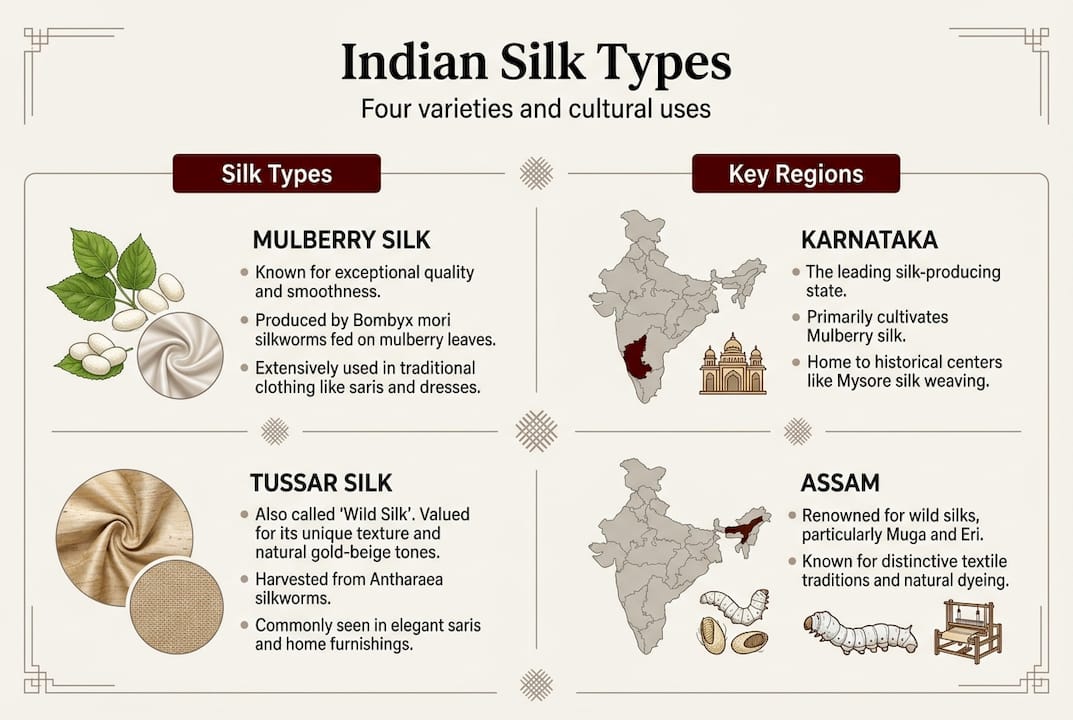
| Silk type | Primary regions | Key characteristics | Cultural use |
|---|---|---|---|
| Mulberry | Karnataka, West Bengal, Tamil Nadu | Fine, lustrous, smooth texture | Bridal sarees, formal wear |
| Tussar | Jharkhand, Chhattisgarh, Bihar | Coarser texture, natural gold tone | Festive wear, tribal ceremonies |
| Eri | Assam, Meghalaya | Soft, warm, open-weave | Everyday wear, spiritual garments |
| Muga | Assam (exclusive) | Natural golden sheen, highly durable | Bihu celebrations, royal attire |
Eri silk deserves special attention. It is produced without killing the silkworm, earning it the name “Ahimsa silk” (non-violent silk). This quality makes it particularly valued in communities that follow principles of non-harm. Eri garments are used in spiritual contexts and are gaining recognition among buyers who prioritize ethical sourcing.
Muga silk is produced exclusively in Assam and holds a Geographical Indication (GI) tag. Its natural golden color does not fade with washing, making it one of the most durable natural fibers in the world. Muga sarees are worn during Bihu, Assam’s major harvest festival, and are considered symbols of Assamese identity.
Pro Tip: When purchasing silk, ask specifically about the silk type and its region of origin. This information helps verify authenticity and supports the right artisan communities.
The artisan fabric legacy behind each silk type reflects generations of specialized knowledge. For those interested in making responsible purchases, the sustainable saree shopping guide outlines how to identify ethically produced silk.
Key points to remember about India’s silk varieties:
- Mulberry silk is the most commercially produced and widely available.
- Tussar silk has a natural, earthy appeal suited to tribal and folk traditions.
- Eri silk is the ethical choice for buyers concerned about animal welfare.
- Muga silk is geographically restricted and among the rarest natural fibers globally.
Masterpieces of heritage: Banarasi, Kanchipuram, and legendary silk crafts
Two silk traditions stand above all others in terms of global recognition: Banarasi from Varanasi, Uttar Pradesh, and Kanchipuram from Tamil Nadu. Both hold GI tags, protecting their authenticity and regional identity.
Banarasi sarees are characterized by intricate brocade work, Mughal-inspired floral and geometric patterns, and the use of zari (metallic thread). A single Banarasi saree can take anywhere from 15 days to 6 months to complete, depending on the complexity of the design. The craft supports approximately 25,000 weaver families in and around Varanasi.
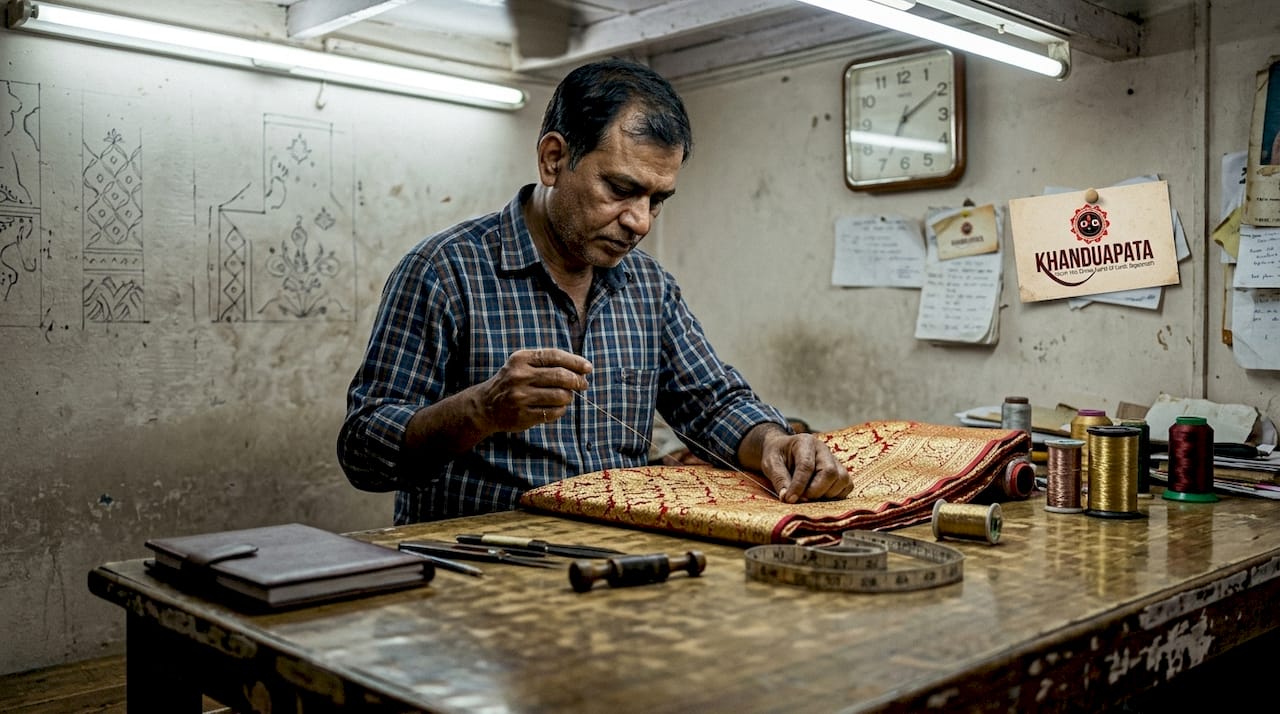
Kanchipuram sarees are known for their heavy silk body, contrasting borders, and the korvai technique. Korvai refers to the method of interlocking the border and body of the saree using separate warp threads, creating a seamless join that is structurally distinct from other weaving methods. Kanchipuram supports around 15,000 weaver families in the region.
| Feature | Banarasi | Kanchipuram |
|---|---|---|
| Origin | Varanasi, Uttar Pradesh | Kanchipuram, Tamil Nadu |
| Primary technique | Brocade, zari work | Korvai interlocking |
| Production time | 15 days to 6 months | 2 weeks to 3 months |
| GI tag | Yes | Yes |
| Families supported | ~25,000 | ~15,000 |
| Design influence | Mughal motifs | Temple architecture, nature |
Beyond these two, India has dozens of other recognized silk weaving traditions:
- Paithani (Maharashtra): Known for peacock and lotus motifs woven in gold zari.
- Pochampally (Telangana): Famous for ikat dyeing, where threads are dyed before weaving.
- Baluchari (West Bengal): Features narrative scenes from Hindu epics woven into the pallu.
- Chanderi (Madhya Pradesh): Lightweight silk with fine texture, often blended with cotton.
- Patola (Gujarat): Double ikat technique, considered one of the most labor-intensive weaving methods in the world.
These crafts are not just products. They are living records of regional history. The heritage handloom trends shaping 2026 show renewed interest in these traditional forms. Understanding handmade saree value helps buyers make informed decisions. A detailed craftsmanship guide explains the technical differences between weaving methods.
Livelihoods and economies: Silk’s impact on artisans and rural India
Silk is not only a cultural artifact. It is an economic foundation for millions of rural households. India’s silk exports reached ₹2,027.56 crores in 2023-24, reflecting steady growth in global demand for authentic Indian silk.
“The handloom sector, including silk weaving, is the second largest employer in rural India after agriculture.”
Artisans face significant challenges. Mechanized production undercuts handloom weavers on price, making it difficult for traditional craftspeople to compete in mass markets. Power looms can produce fabric at a fraction of the time and cost, but the quality and cultural authenticity of handwoven silk cannot be replicated mechanically.
Key challenges facing silk artisans today:
- Wage pressure: Many weavers earn below minimum wage due to middlemen and market pricing structures.
- Skill transfer: Younger generations are leaving weaving for urban employment, creating a knowledge gap.
- Raw material costs: Fluctuating prices for silk yarn affect production costs and profit margins.
- Counterfeit products: Machine-made sarees are often sold as handwoven, undermining authentic producers.
- Climate impact: Changes in weather patterns affect sericulture (silkworm farming), disrupting raw silk supply.
The Indian government has introduced the Silk Samagra Scheme to address some of these issues. The scheme provides financial support for sericulture development, weaver training, and market access. It targets improvements across the entire silk value chain, from cocoon production to finished fabric.
Pro Tip: When buying silk online, look for certifications like the Silk Mark, issued by the Central Silk Board of India. This label confirms the product is made from pure natural silk.
For those interested in supporting rural artisans directly, purchasing from weaver cooperatives or artisan-run platforms makes a measurable difference. The online saree market has expanded access for buyers who want to connect with authentic producers without geographic barriers.
Preserving the future: Silk’s relevance for modern India
Government programs like the Silk Samagra Scheme provide structural support, but individual choices also shape the future of silk traditions. Buyers, designers, and cultural institutions all play a role.
Practical steps for supporting silk heritage:
- Buy directly from artisans or cooperatives when possible to ensure fair compensation reaches the weaver.
- Choose certified products bearing the Silk Mark or GI tag to verify authenticity.
- Prioritize Eri or Muga silk if ethical sourcing is a concern, as these varieties involve lower environmental impact.
- Store silk sarees properly by wrapping them in muslin cloth, avoiding plastic, and airing them periodically to prevent fiber damage.
- Pass down silk sarees as heirlooms with documentation of their origin, weaver, and occasion, preserving both the object and its story.
- Support designers who collaborate with weavers rather than those who replicate traditional patterns through industrial methods.
Modern designers are increasingly incorporating traditional silk weaving into contemporary silhouettes. This approach creates new markets for heritage fabrics without displacing the craft. Fusion collections that use Chanderi or Tussar silk in non-traditional cuts have introduced younger buyers to these textiles.
For guidance on long-term care, the resource on how to preserve handloom sarees covers storage, cleaning, and restoration practices specific to handwoven silk and cotton fabrics.
The future of Indian silk depends on consistent demand for authentic, artisan-made products. Each purchase decision either supports or undermines the ecosystem that keeps these traditions alive.
Celebrate heritage with authentic silk and sarees
The traditions explored in this article are accessible through the collections at Khanduapata, a brand rooted in the heritage of handwoven textiles connected to Lord Jagannath’s temple traditions.
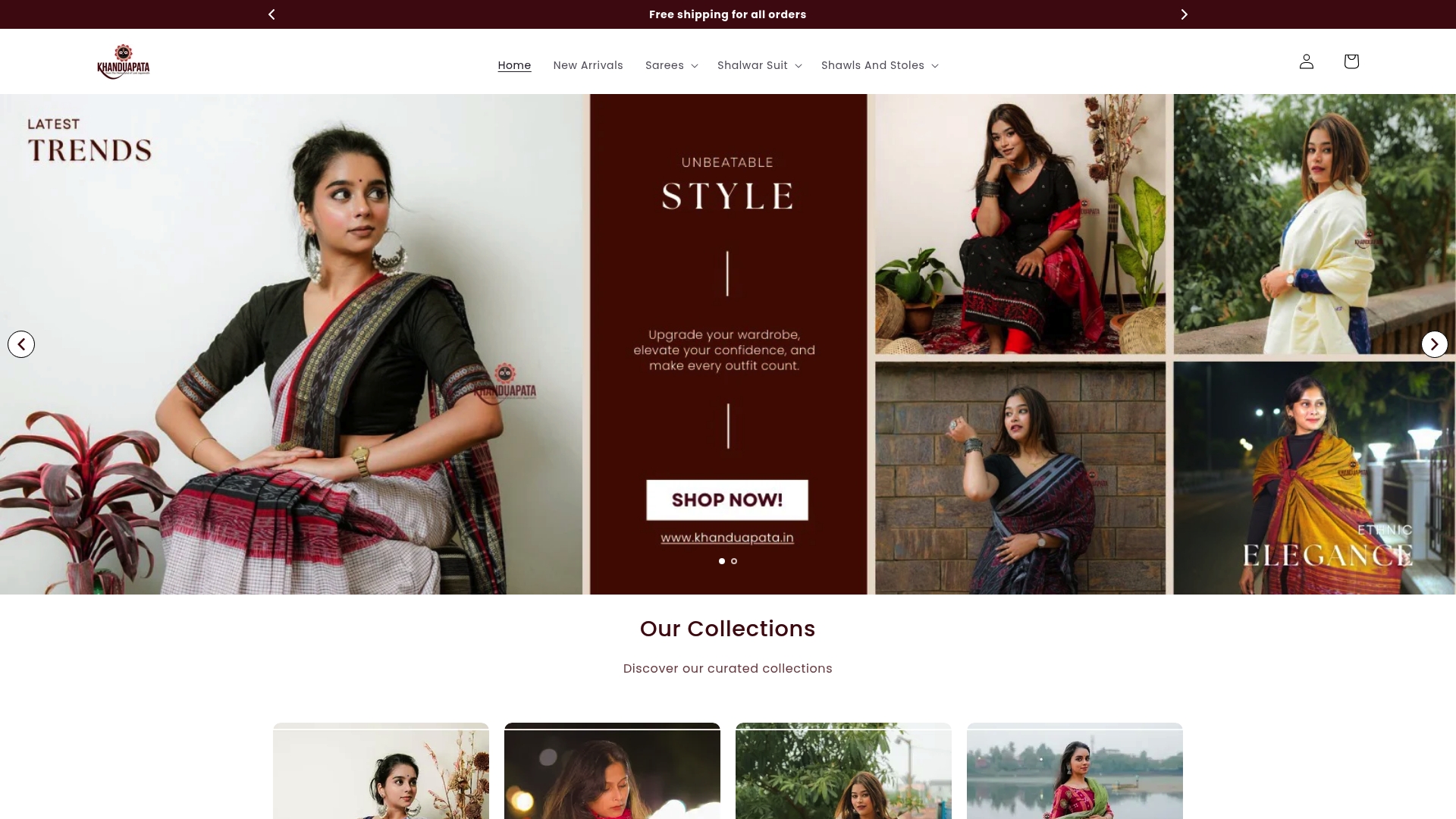
Khanduapata offers a range of handcrafted options for those who want to engage with authentic Indian textile heritage. The Chanderi silk saree collection features lightweight, finely woven pieces that reflect the craft traditions of Madhya Pradesh. For those who prefer cotton, the plant motif cotton sarees offer handwoven quality in everyday wearable formats. Each piece in the collection is made by artisans whose skills represent generations of accumulated craft knowledge. Choosing these products supports both the preservation of heritage weaving and the livelihoods of the communities that practice it.
Frequently asked questions
Why is silk so important in Indian weddings?
Silk symbolizes purity, prosperity, and good fortune, making it essential for wedding attire and rituals across India. Its use in bridal wear is consistent across regional and religious traditions.
What is the difference between Banarasi and Kanchipuram silk sarees?
Banarasi sarees feature Mughal-inspired designs and brocade weaving, while Kanchipuram sarees are known for contrasting borders and the korvai interlocking technique. Both crafts support tens of thousands of weaver families and hold GI tags.
How can I ensure I buy ethically made silk products?
Choose labels that mention sustainable practices, fair wages, and artisan involvement. Products featuring Eri or Muga silk are generally associated with lower environmental impact and ethical production methods.
What is the economic significance of the silk industry for rural India?
Silk production supports millions of livelihoods in rural communities and exports reached ₹2,027.56 crores in 2023-24. The sector is the second largest rural employer in India after agriculture.