Silk sarees: cultural symbolism and authentic craftsmanship
When you drape a silk saree, you’re wearing centuries of cultural symbolism and artisanal mastery that most people never fully appreciate. These garments aren’t just elegant fabric, they’re woven narratives of prosperity, purity, and regional identity created through techniques so complex that a single piece can take two weeks to complete. Understanding the colors that symbolize prosperity and fertility, the specialized weaving methods that distinguish authentic pieces, and the modern challenges threatening this heritage transforms how you value and select these timeless treasures.
Table of Contents
- Key takeaways
- The cultural symbolism of silk saree colors
- Traditional craftsmanship: weaving techniques and authenticity
- Challenges and measures in preserving silk saree heritage
- How to identify and appreciate authentic silk sarees
- Explore elegant traditional silk and cotton sarees at Khanduapata
- Frequently asked questions
Key Takeaways
| Point | Details |
|---|---|
| Cultural color meanings | Silk saree colors express prosperity, fertility, purity, and wealth rooted in centuries of cultural tradition. |
| Authenticity indicators | GI tags, handloom marks, and fabric tests help verify genuine handwoven silk sarees. |
| Complex weaving techniques | Korvai uses three shuttles and two skilled weavers to interlock body, border, and pallu for seamless joins that powerloom versions cannot replicate. |
| Weaving duration | Simple designs take 5 to 7 days while elaborate temple border sarees require 10 to 14 days of continuous labor. |
| Modern challenges | Powerloom fakes threaten authenticity and artisanal livelihoods, underscoring the need for sustainable practices. |
The cultural symbolism of silk saree colors
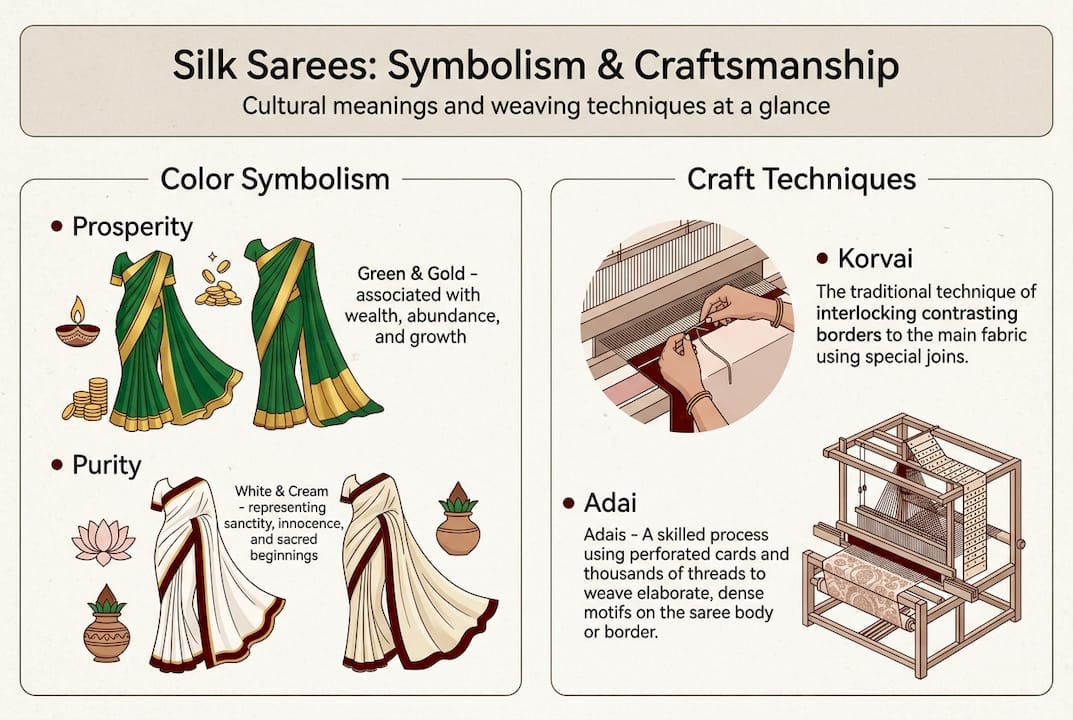
Every shade you see in a silk saree carries deliberate meaning rooted in centuries of cultural tradition. Colors symbolize prosperity, fertility, purity, and wealth in ways that transform these garments into visual languages of celebration and reverence. Red dominates weddings and festivals because it represents prosperity and auspicious beginnings, making it the most sought color for brides across India. When you choose red, you’re embracing a tradition that associates the vibrant hue with marital bliss and abundance.
Green silk sarees speak to fertility and harmony with nature, often selected for spring celebrations and ceremonies honoring growth. The color connects wearers to agricultural cycles and renewal, particularly meaningful in regions where farming traditions shape cultural identity. Yellow embodies purity and spiritual enlightenment, which explains its popularity in religious ceremonies and temple visits. This sacred association makes yellow sarees essential for pujas and devotional occasions where spiritual cleanliness matters most.
Gold threads and golden hues elevate any saree’s elegance while signaling wealth and social status. The shimmer of gold zari work doesn’t just catch light, it communicates prosperity and refined taste. Regional variations add fascinating complexity to color symbolism:
- South Indian traditions favor deep reds and vibrant greens for wedding ceremonies
- Bengali culture embraces white with red borders for special occasions
- Gujarati communities prefer bright yellows and oranges for festive celebrations
- Maharashtrian brides traditionally wear green or yellow silk sarees
Occasion dictates color choice as much as personal preference. Festival sarees burst with bright yellows and oranges, while funeral ceremonies require subdued whites or pale shades. Understanding these symbolic meanings helps you select sarees that honor cultural context while expressing your personal style.
Traditional craftsmanship: weaving techniques and authenticity
The specialized techniques like Korvai require multiple weavers working in perfect coordination, creating complexity that machines cannot replicate. Korvai stands as the most prestigious method, using three shuttles simultaneously to interlock the body, border, and pallu sections. Two skilled weavers sit side by side, passing shuttles back and forth in rhythmic precision that takes years to master. This interlocking creates seamless joins where different colored sections meet, a hallmark of authentic craftsmanship that powerloom versions cannot achieve.
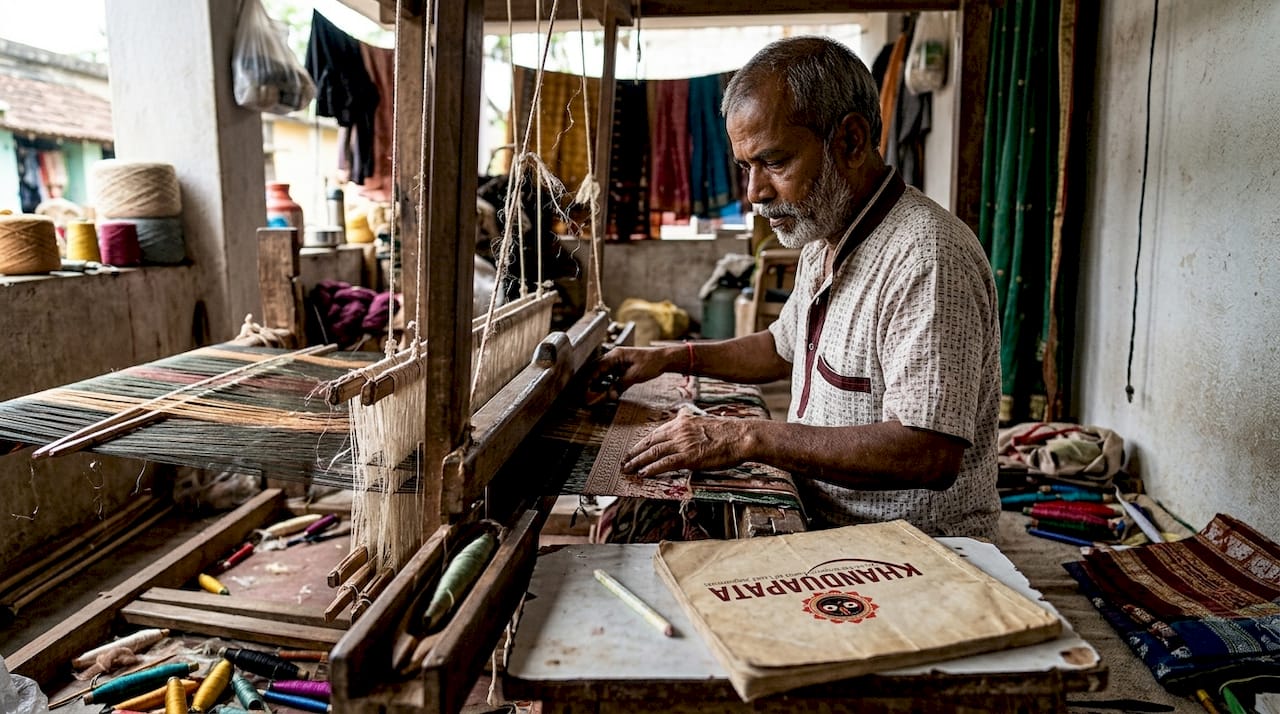
Adai technique involves manually adding motifs and patterns during the weaving process, requiring the artisan to count threads meticulously for each design element. Every peacock, flower, or geometric pattern emerges thread by thread through calculated precision. Jacquard looms introduced mechanized pattern creation, allowing more intricate designs but reducing the purely handwoven character. Traditional weavers debate whether Jacquard pieces deserve the same reverence as fully manual creations.
Weaving duration reveals the investment behind each saree. Simple designs with minimal zari work take approximately 5 to 7 days, while elaborate temple border sarees with heavy gold threadwork demand 10 to 14 days of continuous labor. During peak wedding seasons, weavers work extended hours to meet demand, yet quality never suffers because reputation depends on maintaining standards.
Pure mulberry silk and zari with silver or gold distinguish authentic pieces from synthetic imitations flooding the market. Genuine silk comes exclusively from mulberry silkworms, producing fibers with natural sheen and strength. Real zari threads contain actual silver coated with gold, creating the distinctive metallic luster that synthetic versions cannot match. The burn test offers a quick authenticity check: real silk produces ash that crumbles easily and smells like burning hair, while synthetic fabric melts into hard beads with a chemical odor.
Weight tells its own story about authenticity and quality:
- Traditional handwoven silk sarees weigh approximately 1.5 kg due to dense weaving and heavy zari
- Modern lighter variants weigh around 700g, using thinner silk and minimal metallic threads
- Temple border sarees with extensive gold work can exceed 2 kg
- Powerloom copies feel noticeably lighter and less substantial
Pro Tip: Run your hand across the fabric surface. Authentic handwoven silk feels slightly uneven with a crisp texture, while powerloom versions have uniform smoothness that reveals mechanical production. The irregularities in handwoven pieces aren’t flaws, they’re signatures of human craftsmanship.
Learning to identify authentic handlooms protects you from purchasing fakes while supporting genuine artisans. Check the reverse side of zari work, real metallic threads show the same luster on both sides, whereas imitation zari appears dull on the back. Examine the border attachment closely. Korvai borders interlock seamlessly with the body, while attached borders show visible joining lines.
Challenges and measures in preserving silk saree heritage
Powerloom weaving floods markets with cheap imitations that undermine artisan livelihoods and devalue authentic craftsmanship. These mechanized copies replicate basic patterns at a fraction of the cost and time, tempting budget conscious buyers who don’t recognize quality differences. Powerlooms produce sarees in 2 to 3 days compared to the weeks required for handwoven pieces, creating price disparities that handloom weavers cannot compete against. The visual similarity of powerloom products confuses consumers unfamiliar with authenticity markers, eroding market share for traditional artisans.
Powerloom fakes and mechanization threaten handloom artisans while GI tagging and branding initiatives fight back to protect heritage. Geographical Indication tags certify origin and production methods, with Kanchipuram silk receiving GI status in 2005 and Mysore silk following soon after. These legal protections prevent unauthorized manufacturers from using regional names, though enforcement remains challenging. GI certification requires producers to meet strict quality standards and traditional methods, creating a verified mark of authenticity that educated consumers seek.
E-commerce platforms revolutionize how weavers access customers, eliminating middlemen who historically captured most profits. Direct sales through online marketplaces let artisans retain larger margins while building customer relationships. Digital platforms also enable weavers to showcase their craftsmanship through detailed photography and storytelling, educating buyers about the value they’re purchasing. This transparency builds trust and justifies premium pricing for authentic handwoven sarees.
Branding and education campaigns raise consumer awareness about distinguishing real silk from synthetic alternatives:
- Government initiatives promote handloom marks and certification programs
- Artisan cooperatives conduct workshops teaching authentication techniques
- Social media campaigns highlight weaver stories and traditional methods
- Fashion influencers partner with heritage brands to showcase authentic pieces
Weavers face persistent challenges beyond market competition. Low productivity stems from the time intensive nature of handweaving, limiting income potential even when demand exists. High costs for quality raw materials squeeze profit margins, particularly as silk prices fluctuate. Many young people abandon weaving for more lucrative careers, creating a skills crisis as master weavers age without successors.
“The survival of traditional silk weaving depends on consumers choosing authenticity over convenience. Every genuine saree purchased supports not just an artisan, but an entire cultural ecosystem of skills, knowledge, and heritage that took generations to develop.”
Government subsidies and interest free loans help weavers upgrade equipment and purchase materials, yet bureaucratic hurdles often delay assistance. Supporting sustainable saree shopping practices ensures your purchases directly benefit artisan communities. Buying from verified handloom sources, paying fair prices, and spreading awareness about authentication all contribute to preserving this endangered craft tradition.
How to identify and appreciate authentic silk sarees
Authenticating silk sarees requires systematic examination of multiple features that collectively reveal genuine craftsmanship. Follow this stepwise approach to verify authenticity before purchasing:
- Check for official certifications including GI tags and handloom marks sewn into the fabric
- Examine the fabric weight by holding the saree, authentic pieces feel substantially heavier
- Inspect zari work on both sides, real metallic threads maintain luster on the reverse
- Perform the texture test by rubbing the silk between your fingers for characteristic crispness
- Conduct a burn test on a tiny thread sample, genuine silk produces crumbly ash
- Look for the double warp construction visible when holding fabric up to light
- Verify border attachment method, Korvai borders interlock rather than appearing stitched
Authenticity markers include GI tag, handloom mark, double warp, crisp texture, and zari sheen that distinguish handwoven silk from imitations. The GI tag appears as a sewn label providing certification details and origin information. Handloom marks feature the India Handloom Brand symbol, a white and blue logo certifying handwoven production. Double warp refers to the two sets of warp threads used in traditional weaving, creating thickness and durability that single warp powerloom versions lack.
| Feature | Authentic Silk Saree | Fake/Powerloom Saree |
|---|---|---|
| Weight | 1.2 to 2 kg | 500 to 800g |
| Burn test result | Crumbly ash, hair smell | Hard beads, chemical odor |
| Zari type | Real silver/gold coating | Synthetic metallic thread |
| Texture | Crisp with slight irregularities | Uniformly smooth |
| Border attachment | Interlocked (Korvai) | Stitched or attached |
| Price range | Premium, reflects labor | Significantly cheaper |
| Certification | GI tag, handloom mark | Usually absent |
Crisp fabric feel indicates high quality silk with tight weaving density. When you scrunch authentic silk in your hand, it springs back with a distinctive rustling sound. Synthetic fabrics feel limp and remain compressed. The sheen of real silk appears soft and natural, changing subtly with light angles, while synthetic shine looks harsh and uniform.
Proper care preserves your saree’s longevity and maintains its lustrous appearance for generations. Dry cleaning works best for heavily embellished pieces, but hand washing in cold water with mild detergent suits simpler sarees. Never wring silk fabric, instead roll it in a towel to absorb moisture. Store sarees in cotton covers rather than plastic to allow fabric breathing and prevent moisture damage. Refold along different lines every few months to prevent permanent creases. Following detailed saree maintenance tips protects your investment and honors the artisan’s work.
Pro Tip: Purchase from reputable sources with established track records and transparent sourcing practices. Retailers who provide detailed provenance information, artisan stories, and certification documentation demonstrate commitment to authenticity. Building relationships with trusted sellers gives you access to expert guidance and reduces the risk of purchasing fakes.
Understanding identifying authentic handlooms empowers you to make informed decisions that support traditional craftsmanship. Each authentic purchase validates the countless hours weavers invest in perfecting their craft. The premium price reflects not just material costs but the preservation of cultural knowledge passed through generations.
Explore elegant traditional silk and cotton sarees at Khanduapata
Now that you understand what distinguishes authentic silk sarees, you can confidently explore pieces that embody genuine craftsmanship and cultural heritage. Khanduapata offers handwoven treasures created by skilled artisans who maintain traditional techniques passed down through generations devoted to Lord Jagannath’s sacred garments. Each saree in our collection carries the legacy of devotion and artistry that defines our family’s commitment to preserving India’s textile heritage.
Our floral design chanderi silk saree showcases delicate embroidery work that demonstrates the precision you’ve learned to recognize as a mark of quality. For those seeking the organic beauty of cotton craftsmanship, our plant design cotton saree offers elegant simplicity perfect for everyday wear. Every purchase from Khanduapata directly supports artisan communities while adding authentic handwoven elegance to your wardrobe. When you choose genuine handlooms, you become part of a legacy honoring tradition, supporting sustainable practices, and preserving cultural knowledge for future generations.
Frequently asked questions
What makes silk sarees culturally significant?
Silk sarees embody centuries of Indian heritage, representing status, auspiciousness, and regional identity in ceremonies and festivals. They serve as visual markers of cultural values, with specific colors and designs signaling occasions, social standing, and spiritual devotion. The tradition of wearing silk for important life events connects modern wearers to ancestral practices that honored craftsmanship and beauty. Each regional weaving style carries unique historical narratives and artistic traditions that define community identity.
How can I verify if a silk saree is authentic?
Look for GI tags and handloom marks as official certifications of origin and production methods. Check fabric weight, authentic silk sarees feel substantially heavier than synthetic versions. Perform the burn test on a small thread sample, genuine silk produces crumbly ash with a hair burning smell rather than melting into hard beads. Examine zari work on both sides, real metallic threads maintain their luster on the reverse while imitation versions appear dull.
Why are handwoven silk sarees more valuable?
Handwoven sarees require skilled artisans working days to weeks creating intricate designs through techniques like Korvai that machines cannot replicate. They use premium materials including pure mulberry silk and real silver or gold zari threads, unlike mechanized fakes with synthetic alternatives. The time investment, specialized skills, and quality materials justify higher prices while preserving cultural heritage. Each handwoven piece represents irreplaceable human artistry and generations of accumulated knowledge.
What care practices preserve silk saree quality?
Dry clean heavily embellished sarees or hand wash simpler pieces in cold water with mild detergent, never wringing the fabric. Store in breathable cotton covers rather than plastic to prevent moisture damage and allow air circulation. Refold along different lines every few months to avoid permanent creases in the same spots. Keep sarees away from direct sunlight which fades colors, and use mothballs or neem leaves to protect against insects. Proper maintenance extends longevity for decades, allowing these treasures to become family heirlooms.