Traditional saree maintenance workflow: preserve handlooms
Your treasured handwoven saree deserves more than a careless wash and fold. Many traditional sarees suffer irreversible damage from harsh detergents, direct sunlight, and improper storage. A gentle, well-planned maintenance routine can extend your saree’s lifespan by decades, preserving its vibrant colors and delicate fibers. This guide covers everything from cleaning to storage, giving you a complete workflow to protect your handwoven treasures and keep them looking stunning for years to come.
Table of Contents
- Preparing To Maintain Your Traditional Saree: Tools And Prerequisites
- Executing Gentle Cleaning And Drying Techniques
- Ironing And Appropriate Storage For Long-Lasting Sarees
- Choosing Between Handwashing And Dry Cleaning: Fabric-Specific Advice
- Explore Exquisite Traditional Sarees At Khanduapata
Key takeaways
| Point | Details |
|---|---|
| Gentle cleaning preserves fibers | Use mild soap and cold water to protect delicate handwoven fabrics from damage. |
| Shade drying maintains color | Always dry sarees away from direct sunlight to prevent fading and fiber weakening. |
| Breathable storage prevents damage | Store in unbleached cotton or mulmul, refolding every two months to avoid permanent creases. |
| Iron with care | Use low heat, iron inside-out with a cotton barrier to protect embellishments and fabric. |
| Choose cleaning by fabric type | Handwash daily-wear cotton sarees; dry clean heavily embroidered silk pieces. |
Preparing to maintain your traditional saree: tools and prerequisites
Before you begin cleaning your handwoven saree, gather the right materials and understand why each tool matters. Gentle cleaning methods are crucial for handloom sarees to prevent damage to delicate fibers and dyes. Harsh detergents strip natural oils from cotton and silk, leaving fabric brittle and prone to tearing. Washing machines create excessive friction that can pull threads loose or distort intricate weaves.
You need mild, pH-neutral soap or baby shampoo, a large basin for cold water soaking, soft cotton cloths for blotting, and breathable storage materials. For storage, choose unbleached cotton or mulmul fabrics that allow air circulation and prevent moisture buildup. Avoid plastic bags entirely, as they trap humidity and encourage mildew growth. When shopping for authentic Indian handlooms, ask sellers about recommended cleaning products specific to your saree’s weave and dye type.
Pro Tip: Always test your cleaning method on a small inconspicuous area first, like the inner border or pallu edge, to ensure colors don’t bleed or fabric doesn’t react badly.
Here’s a comparison of cleaning materials and their effects on handwoven sarees:
| Material | Effect on Saree | Best Use |
|---|---|---|
| Mild soap or baby shampoo | Gentle on fibers, preserves natural oils | Daily wear cotton and light silk sarees |
| Harsh detergent | Strips oils, weakens fibers, causes fading | Never use on traditional sarees |
| Cold water | Maintains dye stability, prevents shrinkage | All handwoven fabrics |
| Hot water | Causes color bleeding and fabric distortion | Avoid completely |
| Soft cotton cloth | Absorbs water without friction damage | Blotting and drying all saree types |
Gather these essential items before starting:
- Large basin or clean bathtub for soaking
- Mild pH-neutral soap or baby shampoo
- Several soft cotton cloths for blotting
- Clean, flat surface for drying
- Breathable cotton or mulmul storage bags
- Acid-free tissue paper for folding layers
Executing gentle cleaning and drying techniques
With your tools ready, you can now safely clean your traditional saree while preserving its beauty and structural integrity. Proper drying techniques are essential to preserve the color and integrity of handloom sarees. Follow this step-by-step process to wash your saree without causing fiber damage or color loss.
- Fill your basin with cold water and add a small amount of mild soap, creating gentle suds.
- Submerge the saree completely and let it soak for 10 to 15 minutes without agitation.
- Gently swish the fabric through the water using your hands, never scrubbing or twisting.
- Drain the soapy water and rinse with fresh cold water until all soap residue disappears.
- Press the saree gently against the basin side to remove excess water, never wringing or twisting.
- Lay the saree flat on a clean cotton sheet or hang it in a shaded area with a cloth cover.
The drying phase requires equal attention to prevent damage. Prolonged exposure to direct sunlight can cause color fading in silk sarees, so always choose shade drying or indoor drying locations. If you must hang your saree, drape it over a covered rod or line to distribute weight evenly and prevent stretching. For delicate silk pieces, flat drying on a clean sheet is safest.
Pro Tip: Use leftover boiled-rice water as a final rinse for Kanjeevarams to enhance silk strength and restore natural sheen.
Follow these drying guidelines:
- Always dry in complete shade or indoors away from windows
- Use flat drying for heavily embroidered or delicate silk sarees
- Hang lighter cotton sarees with even weight distribution
- Cover hanging sarees with a thin cotton cloth for extra protection
- Never use clothespins directly on fabric; they leave permanent marks
- Allow complete drying before folding, typically 24 hours for thick fabrics
Once you master these cleaning techniques, you can confidently maintain your collection and even learn to drape sarees perfectly for special occasions, knowing your garments are fresh and well-cared for.
Ironing and appropriate storage for long-lasting sarees
Once your saree is completely dry, proper ironing and storage become your next priorities for maintaining its pristine condition. Correct ironing techniques are necessary to avoid damaging the saree’s fabric, especially when dealing with delicate embroidery or metallic threads.
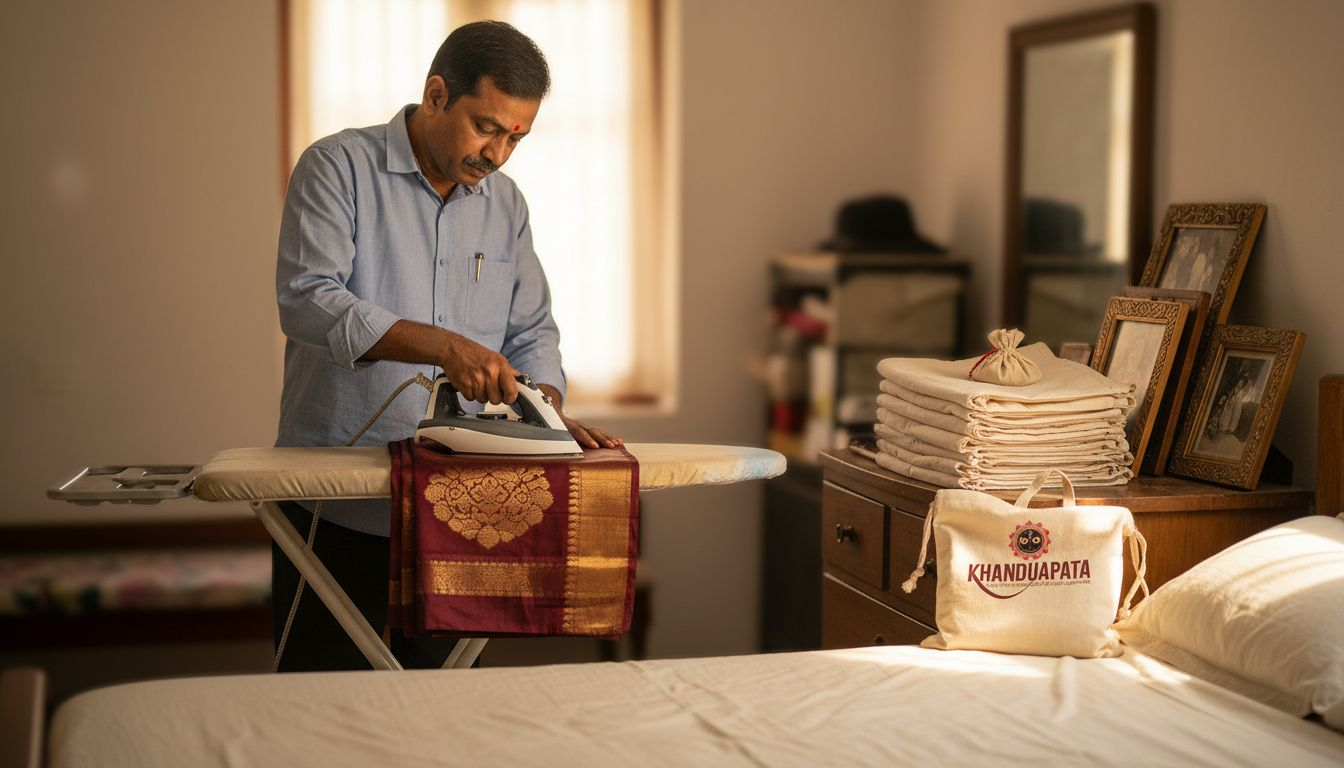
Turn your saree inside-out before ironing to protect embellishments and prevent direct heat contact with decorative elements. Set your iron to low or medium heat depending on fabric type: cotton tolerates medium heat, while silk requires the lowest setting. Place a clean cotton cloth between the iron and saree as a protective barrier. This prevents scorching and creates a buffer that distributes heat evenly. Use steam sparingly, as excessive moisture can weaken natural fibers over time.
After ironing, appropriate storage methods are vital to prevent damage and maintain the saree’s condition. Traditional wisdom recommends refolding sarees every two months to prevent permanent creases from setting into the fabric. Store each saree in a breathable cotton or mulmul bag, never in plastic, which traps moisture and promotes mildew. Layer acid-free tissue paper between folds to cushion fabric and prevent color transfer between different sarees.
Follow these storage best practices:
- Use only breathable natural fabric storage bags
- Avoid plastic covers that trap humidity
- Store in cool, dry places away from direct light
- Refold sarees every two months along different lines
- Keep heavy sarees flat rather than hanging to prevent stretching
- Place silica gel packets in storage areas to control moisture
- Never store sarees in damp cupboards or basements
Here’s how different storage materials affect saree longevity:
| Storage Material | Impact on Saree | Recommendation |
|---|---|---|
| Unbleached cotton bags | Allows air circulation, prevents mildew | Ideal for all saree types |
| Mulmul fabric covers | Lightweight, breathable, traditional choice | Excellent for silk and cotton |
| Plastic bags or covers | Traps moisture, causes yellowing and mildew | Never use |
| Acid-free tissue paper | Prevents color transfer, cushions folds | Use between saree layers |
| Wooden cupboards | Natural, breathable, traditional storage | Best option if properly ventilated |
| Metal trunks | Can rust and stain fabric in humid conditions | Avoid unless lined with fabric |
When you understand proper saree gifting and storage techniques, you can confidently preserve heirloom pieces and pass them to future generations. For specific fabric care, cotton sarees benefit from careful ironing that maintains their crisp texture while protecting decorative borders.
Choosing between handwashing and dry cleaning: fabric-specific advice
Understanding when to handwash versus dry clean your sarees ensures you choose the safest method for each piece in your collection. Dry cleaning is the safest option for delicate and heavily embroidered silk sarees, preserving the saree’s structure and preventing damage to intricate embellishments. However, choosing between handwashing and dry cleaning depends on the saree type, fabric composition, and usage patterns.
Handwashing works beautifully for daily-wear cotton sarees, lightweight silk pieces without heavy embroidery, and sarees you wear frequently. The gentle process removes body oils and light stains without harsh chemicals. Dry cleaning becomes essential for heirloom sarees with gold or silver thread work, heavily embellished wedding sarees, vintage pieces with delicate dyes, and sarees with tough stains that handwashing can’t remove. Professional dry cleaners use specialized solvents that clean without water, protecting metallic threads and preventing dye bleeding.
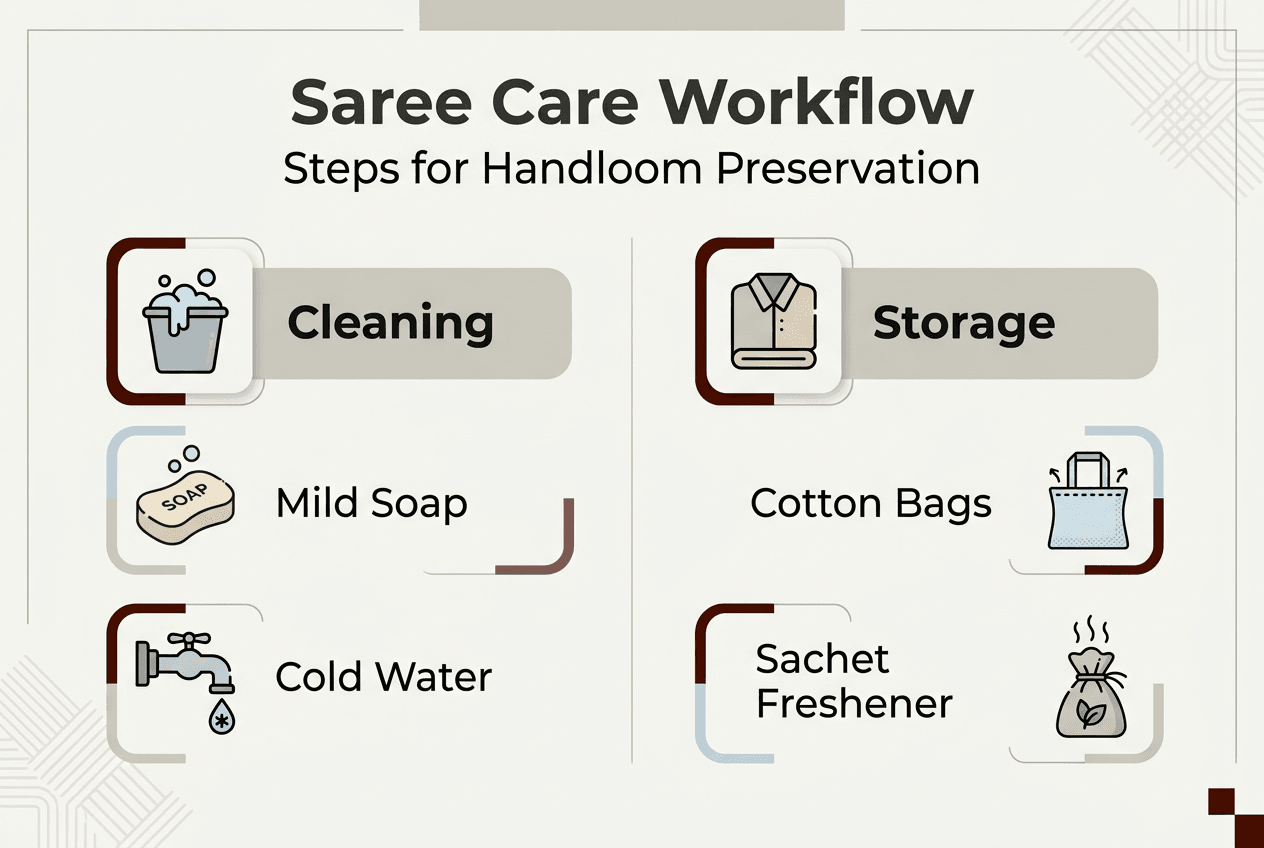
Pro Tip: For delicate silk sarees, avoid frequent washing to preserve sheen and fabric quality. Spot-clean minor stains and air out sarees between wears instead.
Consider these factors when deciding your cleaning method:
- Fabric type: Cotton and light silk suit handwashing; heavy silk and brocade need dry cleaning
- Embellishment level: Simple borders can be handwashed; extensive embroidery requires professional care
- Usage frequency: Daily-wear sarees benefit from gentle handwashing; occasional-wear pieces need less frequent cleaning
- Stain severity: Light marks respond to handwashing; set-in stains need dry cleaning solvents
- Age and condition: New sarees tolerate handwashing better; vintage pieces need professional assessment
- Dye stability: Test a small area first; unstable dyes require dry cleaning to prevent bleeding
When caring for handwoven cotton fabrics, you can typically handwash with confidence, as cotton fibers are more resilient than silk. However, always assess each piece individually based on its embellishments and dye type. If you’re uncertain about the best cleaning method, consult a professional cleaner who specializes in traditional Indian textiles.
Explore exquisite traditional sarees at Khanduapata
Now that you know how to preserve your handwoven treasures, you can confidently expand your collection with stunning traditional sarees. Khanduapata offers an exquisite range of handwoven cotton and silk sarees that embody generations of artisan craftsmanship. Each piece reflects the rich cultural heritage associated with Lord Jagannath, combining traditional techniques with contemporary elegance.

Explore our diverse collection featuring everything from daily-wear cotton sarees to luxurious silk pieces perfect for special occasions. The aesthetic plant design cotton saree showcases intricate botanical motifs that celebrate nature’s beauty, while our Chanderi silk saree features delicate embroidery and floral designs that make any event memorable. With the maintenance knowledge you’ve gained from this guide, you can care for these beautiful sarees properly and enjoy them for decades. Visit Khanduapata today to discover handwoven treasures that honor tradition while meeting your contemporary style needs.
FAQ
How often should I refold my sarees to maintain their condition?
You should refold sarees every two months to prevent permanent creases from setting into the fabric. This practice redistributes pressure points and maintains fabric integrity. When refolding, choose different fold lines each time to avoid weakening the same areas repeatedly.
Is dry cleaning always better than handwashing for silk sarees?
Dry cleaning is not always necessary for all silk sarees. Choosing between handwashing and dry cleaning depends on saree type, fabric, and usage; dry cleaning is best for heavily embroidered or heirloom silk sarees. Lightly used silk sarees without extensive embellishments can be safely handwashed using cold water and mild soap.
How can I prevent color fading in my silk saree?
Avoid drying silk sarees in direct sunlight, as prolonged exposure to direct sunlight causes color fading in silk sarees. Always dry in complete shade or indoors, and store sarees away from bright light sources using breathable cotton or mulmul covers. This protects dyes from UV damage and preserves vibrant colors for years.
Can I use regular detergent on my handwoven cotton saree?
Regular detergents are too harsh for handwoven fabrics and strip natural oils that keep fibers supple. Use only mild, pH-neutral soap or baby shampoo that cleans gently without damaging delicate weaves. Harsh chemicals can cause premature aging, color fading, and fiber breakdown in traditional textiles.
What should I do if my saree develops a musty smell in storage?
Remove the saree from storage immediately and air it out in a shaded, well-ventilated area for several hours. Check for any signs of mildew or moisture damage. Once aired, store the saree in a fresh breathable bag with silica gel packets to control humidity, and ensure your storage area has proper ventilation to prevent future odor issues.