How to drape saree perfectly: step-by-step guide 2026
Draping a saree is more than just wrapping fabric around your body. It’s a timeless art form that connects you to centuries of Indian tradition and cultural heritage. Many beginners find the process intimidating, struggling with uneven pleats, slipping pallus, and choosing the right style for different occasions. This comprehensive guide walks you through everything you need to know, from selecting the perfect fabric to mastering various draping techniques that suit your body type and event. You’ll learn practical steps, troubleshooting tips, and styling secrets to wear your saree with confidence.
Table of Contents
- What You Need: Saree Essentials And Preparation
- Step-By-Step Guide To Draping A Saree
- Customizing Drape Styles For Occasions And Body Types
- Final Touches And Troubleshooting Common Draping Mistakes
- Find Your Perfect Saree At Khanduapata
- Frequently Asked Questions About Saree Draping
Key takeaways
| Point | Details |
|---|---|
| Essential preparation | Gather your saree, petticoat, blouse, safety pins, and accessories before starting the draping process. |
| Master the basics | Draping involves tucking the plain edge, wrapping around the waist, forming pleats, and arranging the pallu over your shoulder. |
| Customize for occasions | Different events and body types require specific draping styles to achieve the most flattering and appropriate look. |
| Secure your drape | Strategic safety pin placement and proper pleat formation ensure your saree stays neat throughout the day. |
What you need: saree essentials and preparation
Before you begin draping, assembling the right components makes the entire process smoother and more enjoyable. You’ll need a saree in your chosen fabric, a well fitted petticoat that matches your saree’s hemline color, a complementary blouse, safety pins, comfortable footwear, and accessories like jewelry or a clutch. Each element plays a specific role in achieving a polished appearance.
Fabric selection significantly impacts how easily you can drape and maintain your saree throughout the day. Cotton sarees offer breathability and hold pleats well, making them ideal for beginners and everyday wear. Choosing cotton sarees provides both comfort and sustainability benefits. Silk sarees create a luxurious drape with more weight and sheen, perfect for formal occasions but requiring more careful handling. Georgette and chiffon fabrics flow beautifully but need extra pins to secure pleats.
Your body type influences which draping style will be most flattering and comfortable. Different saree draping styles demand different body types, so understanding your proportions helps you select techniques that enhance your natural shape. Petite frames often benefit from smaller pleats and higher waist draping, while taller figures can carry broader pleats and longer pallu lengths gracefully.
| Essential Item | Purpose | Selection Tips |
|---|---|---|
| Saree fabric | Main garment drape | Choose cotton for beginners, silk for formal events, lighter fabrics for hot weather |
| Petticoat | Foundation garment | Match hemline color to saree, ensure snug waist fit, select cotton for easy tucking |
| Blouse | Upper garment | Coordinate with saree color, ensure proper fit, explore blouse pattern styles for variety |
| Safety pins | Securing pleats and pallu | Use 6 to 8 medium sized pins, choose colors matching your saree |
| Accessories | Complete the look | Select jewelry, footwear, and bags from saree accessories guide options |
Pro Tip: Choose a petticoat that’s one shade darker than your saree’s lightest color. This prevents the petticoat from showing through lighter fabrics and creates a seamless foundation for tucking pleats securely.
Familiarizing yourself with traditional saree draping styles before you start helps you visualize the final result and understand regional variations. Different Indian states have developed unique draping methods over centuries, each with distinct characteristics and cultural significance. Researching these styles expands your repertoire and allows you to experiment with various looks.
Step-by-step guide to draping a saree
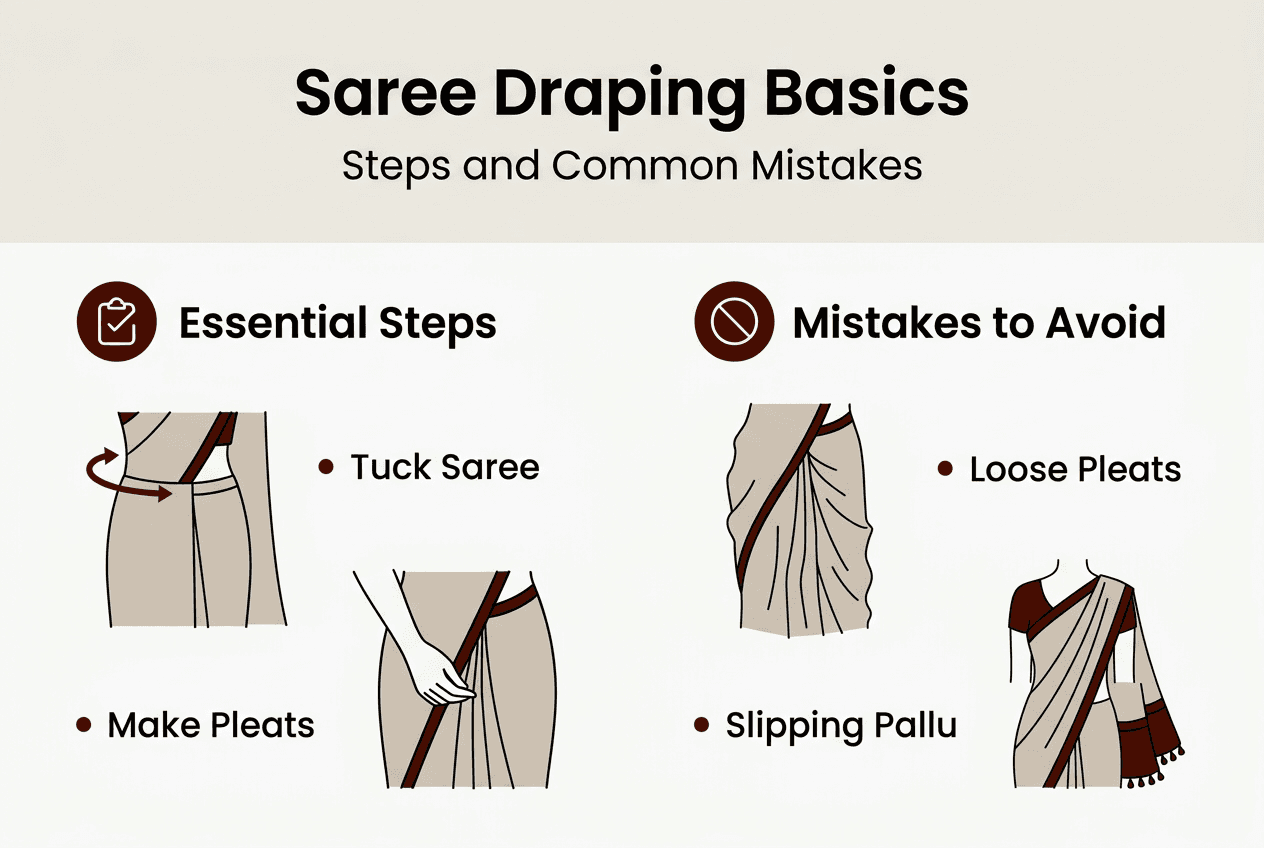
Mastering the fundamental draping technique gives you a solid foundation for experimenting with variations later. The basic drape involves tucking the plain edge of the saree into the petticoat, making pleats, and tucking them in front, creating the classic silhouette recognized worldwide. Follow these steps carefully for your first attempt.
-
Start by tucking the plain end of your saree into the petticoat at your navel, slightly to the right of center. Ensure the lower edge of the saree touches the floor, then tuck firmly into the petticoat waistband.
-
Wrap the saree around your waist once completely, moving from right to left. Keep the fabric taut but not tight, maintaining an even hemline that grazes the floor as you walk.
-
Begin forming pleats by gathering fabric from the tucked end, creating 5 to 7 pleats of equal width, typically 5 to 6 inches each. Hold pleats together at the top while adjusting the bottom edges to fall evenly.
-
Tuck the pleated section into the petticoat at your navel, ensuring pleats face left and fan out neatly. Adjust the height so the pleats reach just above your ankles for comfortable movement.
-
Drape the remaining fabric, your pallu, over your left shoulder from back to front. Let it fall to knee length or longer, depending on your preference and the saree’s total length.
| Step | Key Tips | Common Mistakes to Avoid |
|---|---|---|
| Initial tuck | Keep fabric straight and hemline even | Tucking too high or too low, creating uneven length |
| Waist wrap | Maintain consistent tension around body | Wrapping too loosely, causing sagging later |
| Pleat formation | Make uniform width pleats, align bottom edges | Creating uneven pleats, misaligned bottoms |
| Pleat tucking | Secure firmly at navel, face pleats left | Tucking too loose, facing pleats wrong direction |
| Pallu draping | Position over left shoulder, adjust length | Letting pallu slip off shoulder, incorrect length |
Pro Tip: Place one safety pin at the top of your pleats where they meet the petticoat, another pin securing the pallu to your blouse shoulder, and a third pin at the pallu’s inner edge to prevent it from sliding. This three pin method keeps everything secure without being visible.
Exploring beginner saree draping techniques helps you understand how small adjustments create different effects. Practice makes perfect, so don’t feel discouraged if your first attempts aren’t flawless. Most women need several tries before achieving the neat, confident drape they envision.
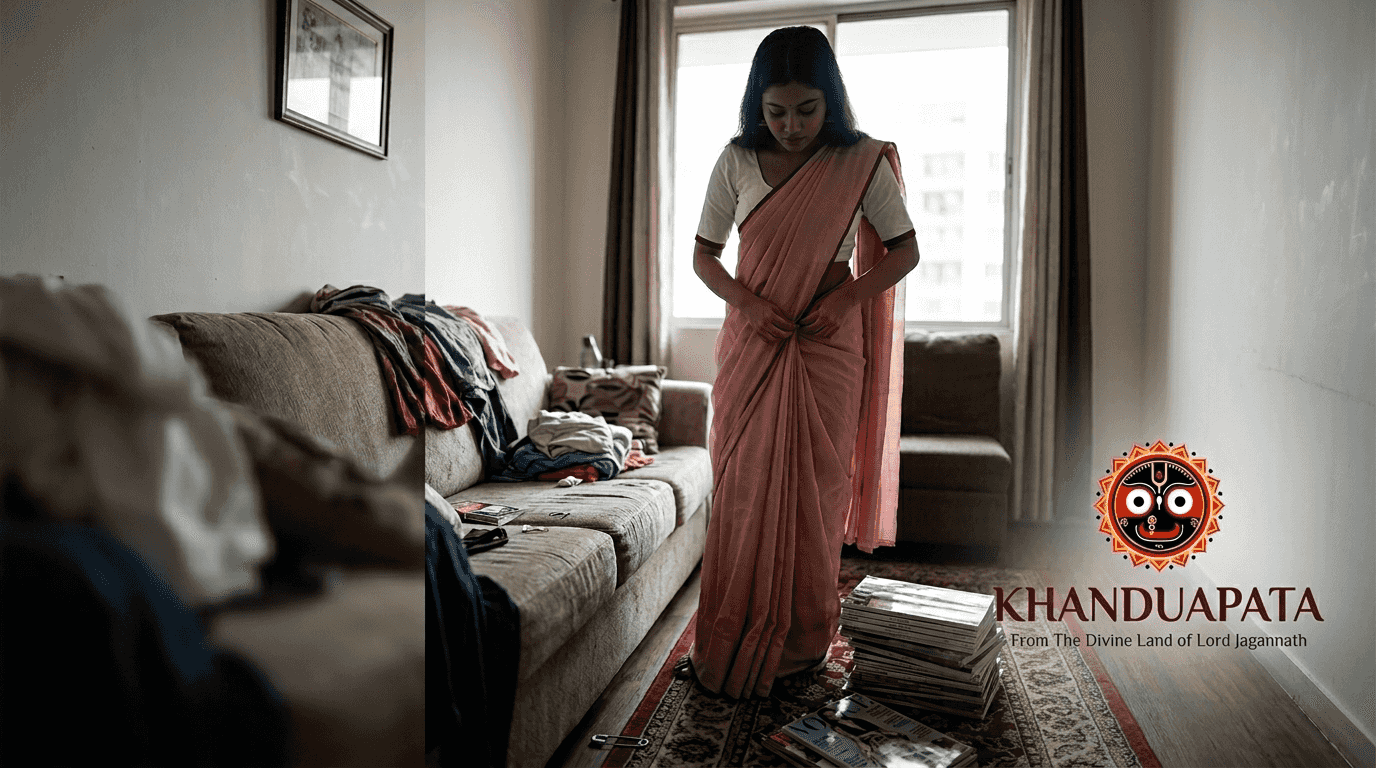
The beauty of learning basic saree draping steps lies in building muscle memory. Your hands will eventually remember the motions, making the process faster and more intuitive. Set aside 30 to 45 minutes for your initial practice sessions, gradually reducing time as you gain proficiency.
Customizing drape styles for occasions and body types
Adapting your draping technique to match the event and your physique elevates your saree game significantly. The occasion informs the type of saree draping style, whether you’re attending a traditional wedding ceremony, corporate event, or casual family gathering. Understanding these nuances helps you make appropriate choices.
Traditional ceremonies often call for classic Nivi style draping with neatly pleated pallu and conservative pleat width. Religious events may require the pallu to cover your head, necessitating extra length and secure pinning. Modern cocktail parties allow for experimental drapes like the butterfly style, pant style saree, or lehenga style with visible pleats arranged in a circular pattern.
| Draping Style | Best Occasions | Body Type Compatibility | Character |
|---|---|---|---|
| Classic Nivi | Weddings, formal events, office wear | All body types, especially hourglass and pear shapes | Traditional, elegant, universally flattering |
| Bengali style | Cultural festivals, traditional ceremonies | Tall and average height figures | Distinctive, requires practice, cultural significance |
| Gujarati style | Festive celebrations, garba events | Petite to average frames | Playful, allows easy movement, colorful |
| Butterfly drape | Cocktail parties, modern events | Slim and athletic builds | Experimental, contemporary, fashion forward |
| Lehenga style | Receptions, sangeet functions | Curvy and plus size figures | Glamorous, conceals midsection, creates volume |
Selecting the right saree fabric and blouse design amplifies the impact of your chosen draping style. Cotton sarees for body types work beautifully for daily wear and semi formal occasions, offering comfort without sacrificing style. Heavier silk sarees create structure and hold pleats firmly, ideal for formal events where you’ll be standing or sitting for extended periods.
When adapting drapes for your body shape, consider these practical guidelines:
- Petite frames should opt for smaller, narrower pleats and avoid heavy border sarees that overwhelm your silhouette
- Tall figures can carry broader pleats, longer pallu lengths, and bold border designs with confidence
- Plus size bodies benefit from vertical pleat arrangements and darker colors that create a slimming effect
- Athletic builds look stunning in drapes that add volume, like the lehenga style or butterfly drape with ruffled edges
- Hourglass shapes are flattered by classic Nivi draping that emphasizes the natural waistline
Exploring body shape saree adaptations reveals how minor tweaks in pleat placement and pallu arrangement transform your overall appearance. Don’t hesitate to experiment with different styles at home before committing to one for an important event.
Pro Tip: Pair your saree with a contrasting blouse color to create visual interest and draw attention to your face. Wearing neutral toned footwear in beige, gold, or silver ensures your shoes complement any saree color without clashing.
Understanding various occasion saree drapes expands your styling options and prevents fashion missteps. A saree draped inappropriately for the setting can feel uncomfortable and out of place, while the right choice boosts your confidence and helps you enjoy the event fully.
Final touches and troubleshooting common draping mistakes
Even experienced saree wearers encounter occasional draping challenges that need quick fixes. Recognizing these issues early and knowing how to address them ensures you maintain a polished appearance throughout your event. Most problems stem from inadequate preparation or rushing through the draping process.
Uneven pleats create a sloppy, unprofessional look that distracts from your saree’s beauty. This usually happens when you don’t align the bottom edges carefully while forming pleats or when you tuck them at inconsistent depths into the petticoat. Taking an extra minute to arrange pleats properly before tucking prevents this frustration.
A slipping pallu ranks among the most common and annoying saree problems. It occurs when the pallu isn’t secured properly to your blouse or when the fabric is too slippery. Heavy silk and satin sarees are particularly prone to this issue without adequate pinning.
Petticoat mismatches can ruin an otherwise perfect drape. Wearing a petticoat that’s too loose causes the entire saree to sag and shift, while one that’s too tight creates visible lines and discomfort. The petticoat’s length also matters, as it should fall just above your ankle to prevent the saree from dragging.
Accessory choices impact your overall presentation significantly. Over accessorizing overwhelms the saree’s inherent beauty, while under accessorizing can make even expensive sarees look incomplete. Finding the right balance requires understanding the saree’s design and the occasion’s formality.
Here are quick fixes and preventive measures for common draping issues:
- For uneven pleats, release them completely and reform with careful attention to width consistency and bottom edge alignment
- Secure a slipping pallu with safety pins at the shoulder seam, mid back, and waist level for all day stability
- Replace an ill fitting petticoat immediately, as no draping technique can compensate for poor foundation garments
- Choose accessories that complement rather than compete with your saree, selecting one statement piece and keeping other jewelry minimal
- Verify your saree’s total length before starting, ensuring the pallu will be long enough for your chosen draping style
- Test your drape by walking, sitting, and raising your arms to identify potential issues before leaving home
Pro Tip: Keep a small safety pin kit in your purse containing 4 to 5 extra pins in colors matching your most worn sarees. Slip on universal tone sandals in nude, gold, or silver that work with multiple saree colors, eliminating the need for perfect shoe matches.
Proper pleat formation and consistent width are crucial for a neat appearance. Taking time to create uniform pleats transforms an amateur drape into a professional looking ensemble that holds its shape beautifully throughout the day.
Double checking your pallu length before finalizing the drape prevents awkward adjustments later. The pallu should reach at least knee length when draped over your shoulder, with enough fabric to create graceful folds. If it’s too short, you may need to reduce pleat width or use fewer pleats to allocate more fabric to the pallu section.
Ensuring secure fitting involves testing your drape’s stability through normal movements. Walk around your room, sit in a chair, and bend slightly to simulate real world activities. Any shifting or loosening indicates areas that need additional pinning or tighter tucking. Addressing these issues at home saves embarrassment and discomfort during your event.
Consulting saree styling essentials provides additional insights into perfecting your overall look. Professional stylists recommend practicing your complete look, including makeup, hair, and accessories, at least once before the actual event. This trial run reveals timing requirements and potential adjustments needed for a flawless presentation.
Researching accessory choices for sarees helps you understand how jewelry, bags, and footwear interact with different saree styles and colors. Traditional gold jewelry pairs beautifully with silk sarees, while contemporary oxidized silver complements cotton sarees perfectly. Your accessories should enhance the saree’s character without overwhelming its design.
Find your perfect saree at Khanduapata
Now that you’ve mastered the art of saree draping, finding quality sarees that showcase your newfound skills becomes the next exciting step. Khanduapata offers an exquisite collection of handwoven sarees perfect for practicing various draping styles and occasions. Our pure cotton sarees provide the ideal fabric for beginners, holding pleats beautifully while remaining comfortable throughout the day.
Our heritage of creating garments for Lord Jagannath ensures every piece carries exceptional craftsmanship and attention to detail. From elegant tribal design cotton sarees perfect for cultural events to luxurious Chanderi silk saree collection ideal for weddings and formal occasions, we offer styles that complement every draping technique you’ve learned. Explore the complete range at Khanduapata and discover sarees that honor tradition while meeting contemporary tastes.
Frequently asked questions about saree draping
Can anyone learn to drape a saree easily?
Absolutely, anyone can learn to drape a saree with practice and patience. Beginners should start with cotton sarees that hold pleats well and allow multiple attempts without damaging the fabric. Most people achieve a neat, confident drape after 3 to 5 practice sessions, with each attempt building muscle memory and improving technique.
How do I choose the right saree fabric for beginners?
Cotton sarees are ideal for beginners because they’re lightweight, breathable, and hold pleats without slipping. The fabric’s natural texture provides grip when tucking into the petticoat, making it easier to secure pleats and maintain the drape throughout the day. Avoid slippery fabrics like satin or georgette until you’ve mastered basic draping techniques.
What accessories are best to complete a saree look?
Choose accessories based on your saree’s style and the occasion’s formality. Traditional gold jewelry pairs beautifully with silk sarees for weddings, while oxidized silver complements cotton sarees for casual events. Keep one statement piece as your focal point, whether that’s earrings, a necklace, or bangles, and keep remaining jewelry minimal to avoid overwhelming your saree’s design.
How to keep saree pleats neat all day?
Secure your pleats with safety pins at three strategic points: where pleats meet the petticoat, at your hip level, and where the pallu drapes over your shoulder. Forming uniform width pleats with aligned bottom edges creates a foundation that resists shifting. Choosing fabrics with natural grip like cotton or textured silk also helps maintain pleat integrity throughout extended wear.
Are there saree draping styles for petite or plus size body types?
Yes, specific draping styles flatter different body types beautifully. Petite frames look stunning in styles with smaller, narrower pleats and minimal border width, while plus size figures shine in lehenga style draping that creates a flattering silhouette. Vertical pleat arrangements and darker colors create elongating effects for any body type, while strategic pallu placement draws attention to your best features.