What is traditional silk saree: guide to heritage craftsmanship
You’ve probably admired the shimmer of a silk saree at a wedding or festival, but do you truly understand what makes a traditional silk saree different from the countless synthetic imitations flooding the market? These handwoven masterpieces represent centuries of cultural heritage, skilled artistry, and regional identity. From the intricate korvai technique of Kanchipuram to the double ikat patterns of Patola, each traditional silk saree tells a story of dedication and craftsmanship. This guide will walk you through the origins, production process, authenticity markers, and cultural significance of traditional silk sarees, empowering you to recognize genuine pieces and support the artisans who keep this heritage alive.
Table of Contents
- Key takeaways
- What is a traditional silk saree? Origins and defining features
- The making of a traditional silk saree: from cocoon to drape
- How to identify authentic traditional silk sarees: tests and markers
- Why traditional silk sarees matter: culture, sustainability, and supporting artisans
- Explore authentic silk sarees at Khanduapata
- Frequently asked questions
Key Takeaways
| Point | Details |
|---|---|
| Origins and regional styles | Traditional silk sarees are handwoven garments made from pure mulberry silk, originating in different Indian regions with unique regional styles and GI protections. |
| Authenticity markers | Authenticity is identified by handloom methods such as pit looms and frame looms, interlocking korvai borders, and GI tagged names protecting regional designs. |
| Weaving techniques | Weaving techniques like korvai interlocking and double ikat create durable joins and distinctive patterns that machines cannot replicate. |
| Cultural and economic impact | They embody cultural heritage while sustaining rural artisan families who rely on handloom work. |
What is a traditional silk saree? Origins and defining features
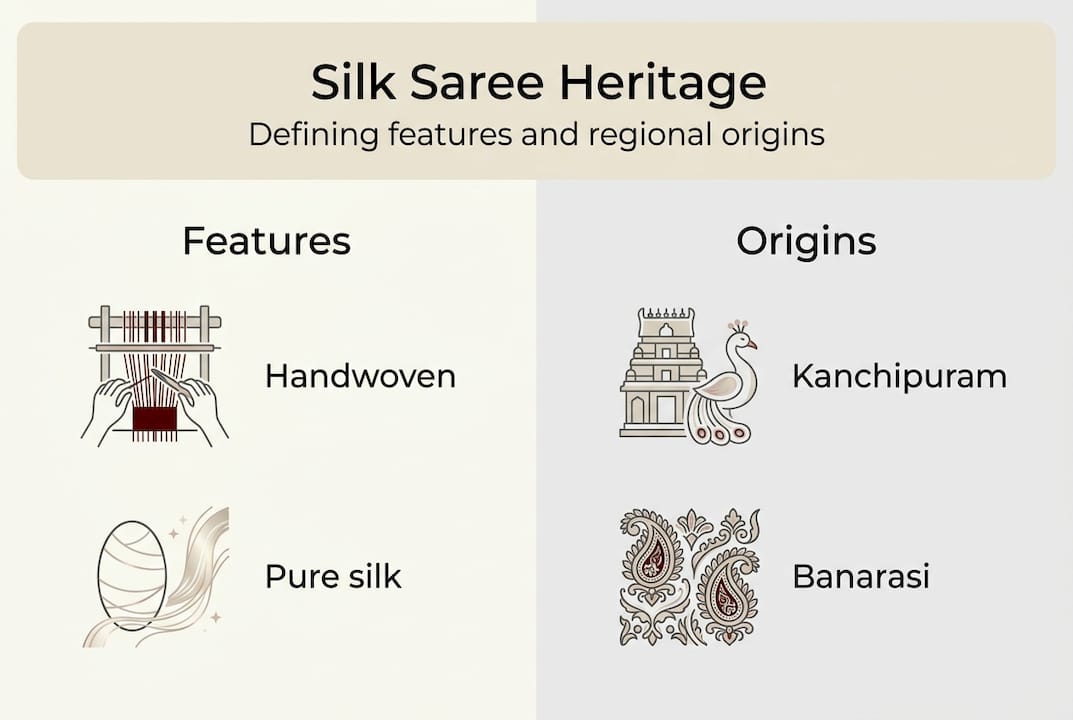
Traditional silk sarees are handwoven garments made primarily from pure mulberry silk, originating from various regions in India with unique styles and GI protections. These sarees aren’t just fabric draped around the body. They’re wearable art forms that carry the cultural DNA of their regions. Each weaving center developed distinctive techniques over centuries, creating styles so unique that they earned Geographical Indication tags to protect their heritage.
Regional varieties showcase remarkable diversity in design and technique:
- Kanchipuram silk sarees from Tamil Nadu feature heavy zari borders and temple-inspired motifs woven using three shuttles simultaneously
- Dharmavaram sarees from Andhra Pradesh are known for their bold contrasting borders and pallus with intricate peacock and elephant designs
- Patola sarees from Gujarat use the complex double ikat technique where both warp and weft threads are dyed before weaving
- Banarasi silk sarees incorporate Mughal-inspired brocade work with gold and silver zari threads
- Mysore silk sarees are lighter weight with subtle gold zari and are perfect for daily wear
The traditional weaving techniques define authenticity. Artisans use pit looms or frame looms operated entirely by hand, creating fabric with a texture and drape that machines cannot replicate. The korvai interlocking method joins borders to the body without stitching, ensuring durability and seamless integration. Cultural symbolism runs deep in these sarees, with motifs representing prosperity, fertility, and divine blessings passed down through generations.
GI protections preserve this heritage by legally recognizing that only sarees produced in specific regions using traditional methods can carry certain names. This system protects both consumers and artisans from imitations. When you purchase a GI-tagged saree, you’re supporting cooperative weavers and rural artisan families who depend on this craft for their livelihood. Learning about identifying authentic handlooms helps you make informed choices that honor these traditions.
The making of a traditional silk saree: from cocoon to drape
Production involves cocoon boiling and degumming, yarn reeling, dyeing, warping, and handweaving using techniques like korvai and double ikat, with complexity affecting production time from days to weeks. Understanding this process reveals why authentic traditional silk sarees command premium prices and deserve your respect. Each stage requires specialized skill and patience that machines simply cannot replicate.
The journey begins with sericulture, where silkworm cocoons are carefully harvested:
- Cocoon boiling removes the sericin gum that binds silk fibers together, a process called degumming that must be timed perfectly to avoid damaging the delicate threads
- Reeling extracts continuous filaments from multiple cocoons simultaneously, twisting them together to form a single strong thread
- Yarn processing involves throwing, where threads are twisted further to increase strength and create the desired texture
- Dyeing transforms white silk into vibrant colors using either natural dyes from plants and minerals or acid dyes that bond permanently with protein fibers
- Warping arranges thousands of threads in parallel on a large frame, creating the foundation for the loom
- Drafting threads through the loom’s heddles and reed according to the desired pattern, a meticulous setup that can take days for complex designs
- Weaving brings the design to life as the weaver interlaces weft threads through the warp using shuttles, creating patterns through careful thread selection and tension control
The korvai technique used in Kanchipuram sarees involves three shuttles working simultaneously. One shuttle carries the body color, while two others create contrasting borders on each side. The weaver interlocks these sections during weaving rather than stitching them later, creating a seamless join that’s stronger and more beautiful. Double ikat patterns require dyeing both warp and weft threads in precise patterns before weaving, demanding extraordinary skill to align the threads perfectly.
Time investment varies dramatically based on complexity. A simple silk saree might take two to three days, while an elaborate Patola with intricate ikat patterns can require two weeks or more of focused work. Zari attachment adds another layer of artistry, with pure gold or silver threads woven into borders and pallus to create that signature shimmer. Understanding maintaining handloom sarees helps preserve this craftsmanship for years.
Pro Tip: Ask the seller about the weaving technique used in your saree. Genuine sellers will eagerly explain the process, while those selling imitations often provide vague answers or avoid technical details altogether.
How to identify authentic traditional silk sarees: tests and markers
Authenticity benchmarks include Silk Mark, Handloom Mark, GI tags, and tests like weight, zari luster, reverse side threads, burn test, and korvai interlocking that confirm genuineness. With synthetic sarees flooding the market at tempting prices, knowing how to verify authenticity protects your investment and supports genuine artisans. These practical tests require no special equipment and can be performed right in the store or at home.
Physical characteristics reveal quality immediately. A pure silk saree has substantial weight, typically between 400 to 700 grams depending on the style. The fabric feels cool to the touch and has a distinctive rustling sound when you scrunch it. Zari threads should have a rich, warm luster rather than the harsh shine of synthetic alternatives. Examine the reverse side carefully. In genuine handloom sarees, you’ll see loose threads and slight irregularities that prove human hands created each weave.
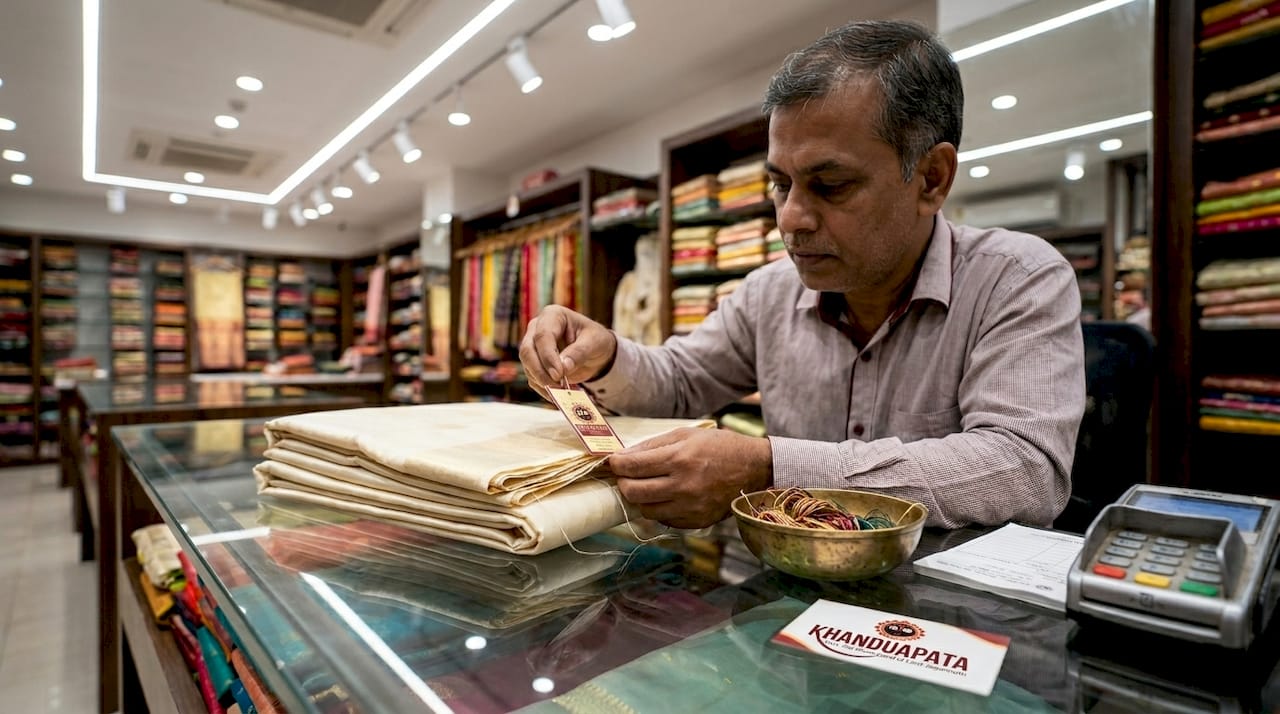
The burn test provides definitive proof of silk purity. Pull a single thread from the saree’s edge and carefully burn it with a match. Pure silk smells exactly like burnt hair and leaves behind a dark, crushable ash. Synthetic materials smell like burning plastic and leave hard, bead-like residue. This test works because silk is a protein fiber chemically similar to hair, while synthetics are petroleum-based polymers.
| Feature | Authentic Traditional Silk | Synthetic/Powerloom Imitation |
|---|---|---|
| Weight | 400-700 grams | Often lighter, under 300 grams |
| Touch | Cool, slightly coarse texture | Smooth, slippery, warm |
| Zari | Warm luster, doesn’t tarnish quickly | Harsh metallic shine, may tarnish |
| Reverse Side | Loose threads, slight irregularities | Clean, uniform, machine-perfect |
| Burn Test | Smells like burnt hair, crushable ash | Plastic smell, hard beads |
| Border Join | Korvai interlocking, seamless | Often stitched separately |
| Certification | Silk Mark, Handloom Mark, GI tag | Usually absent or fake |
Official certifications provide additional assurance. The Silk Mark label guarantees pure silk content and is issued by the Silk Mark Organization of India after rigorous testing. The Handloom Mark confirms the saree was woven on a handloom rather than a powerloom. GI tags identify regional authenticity, ensuring a Kanchipuram saree actually comes from Kanchipuram and follows traditional methods. Check these labels carefully for holograms and serial numbers that prevent counterfeiting.
Korvai interlocking inspection offers a foolproof authenticity check for certain styles. Gently pull the border away from the body of the saree. In genuine korvai work, the border and body are interlocked thread by thread during weaving, making separation impossible without damaging the fabric. Stitched borders, common in powerlooms, will show a seam line and can be pulled apart. This technique also makes the saree more durable since borders won’t tear away from the body over time. Learning about checking online saree authenticity helps when shopping remotely.
Pro Tip: Always request the seller to perform the burn test in front of you using a thread from the actual saree you’re purchasing, not a sample thread they provide. Unscrupulous sellers sometimes keep genuine silk threads handy while selling synthetic sarees.
Why traditional silk sarees matter: culture, sustainability, and supporting artisans
India is the world’s second largest silk producer, and traditional sarees sustain 30 lakh weavers preserving heritage amid modern competition. These numbers represent real families in rural villages whose livelihoods depend entirely on continuing ancestral weaving traditions. When you choose a traditional silk saree over a synthetic alternative, you’re making a statement about what you value and who you support.
Economic sustenance flows directly to artisan communities:
- Weaving families earn fair wages for skilled labor that took years to master through apprenticeship
- Cooperative societies ensure weavers receive better prices than they would from middlemen
- Women in weaving households contribute to family income through ancillary tasks like thread preparation and finishing
- Young artisans see viable career paths in traditional crafts rather than abandoning their heritage for urban migration
- Entire village economies thrive around weaving clusters, supporting dyers, zari makers, and finishing specialists
Preservation of ancestral techniques protects intangible cultural heritage. Each weaving tradition carries knowledge accumulated over centuries about color combinations, pattern symbolism, and technical innovations. When weavers stop practicing their craft, this knowledge disappears within a generation. The motifs woven into traditional sarees tell stories about regional mythology, agricultural cycles, and social customs. Losing these traditions means losing a piece of India’s cultural identity that no museum can fully preserve.
Environmental benefits make handloom weaving inherently sustainable. Traditional looms run on human power, consuming zero electricity and producing no industrial pollution. Natural dyes derived from plants create vibrant colors without toxic chemical runoff. Even when artisans use acid dyes, the small-scale batch processes generate minimal waste compared to industrial textile mills. The slow fashion philosophy embedded in traditional sarees encourages buying fewer, higher-quality pieces that last decades rather than disposable fast fashion.
“A traditional silk saree isn’t just clothing. It’s a piece of living history that connects you to generations of artisans who poured their skill and soul into every thread. When you wear it, you carry forward a legacy that deserves to survive in our modern world.”
Promoting authentic craftsmanship over synthetic imitations requires conscious consumer choices. Every purchase of a genuine traditional saree sends a market signal that handmade quality matters. Conversely, buying cheap synthetic alternatives, even unknowingly, reduces demand for authentic pieces and makes it harder for weavers to earn sustainable incomes. Cultural pride in wearing traditional sarees to festivals, weddings, and celebrations demonstrates to younger generations that heritage fashion remains relevant and beautiful. Learning about supporting saree artisans helps you make purchasing decisions that create positive impact.
Explore authentic silk sarees at Khanduapata
After learning what makes traditional silk sarees special, you deserve a trusted source where authenticity and craftsmanship come together. Khanduapata honors the ancient tradition of creating handwoven garments, a practice our family dedicated to Lord Jagannath for generations. This sacred heritage evolved into our commitment to preserving India’s textile artistry through every piece we offer.
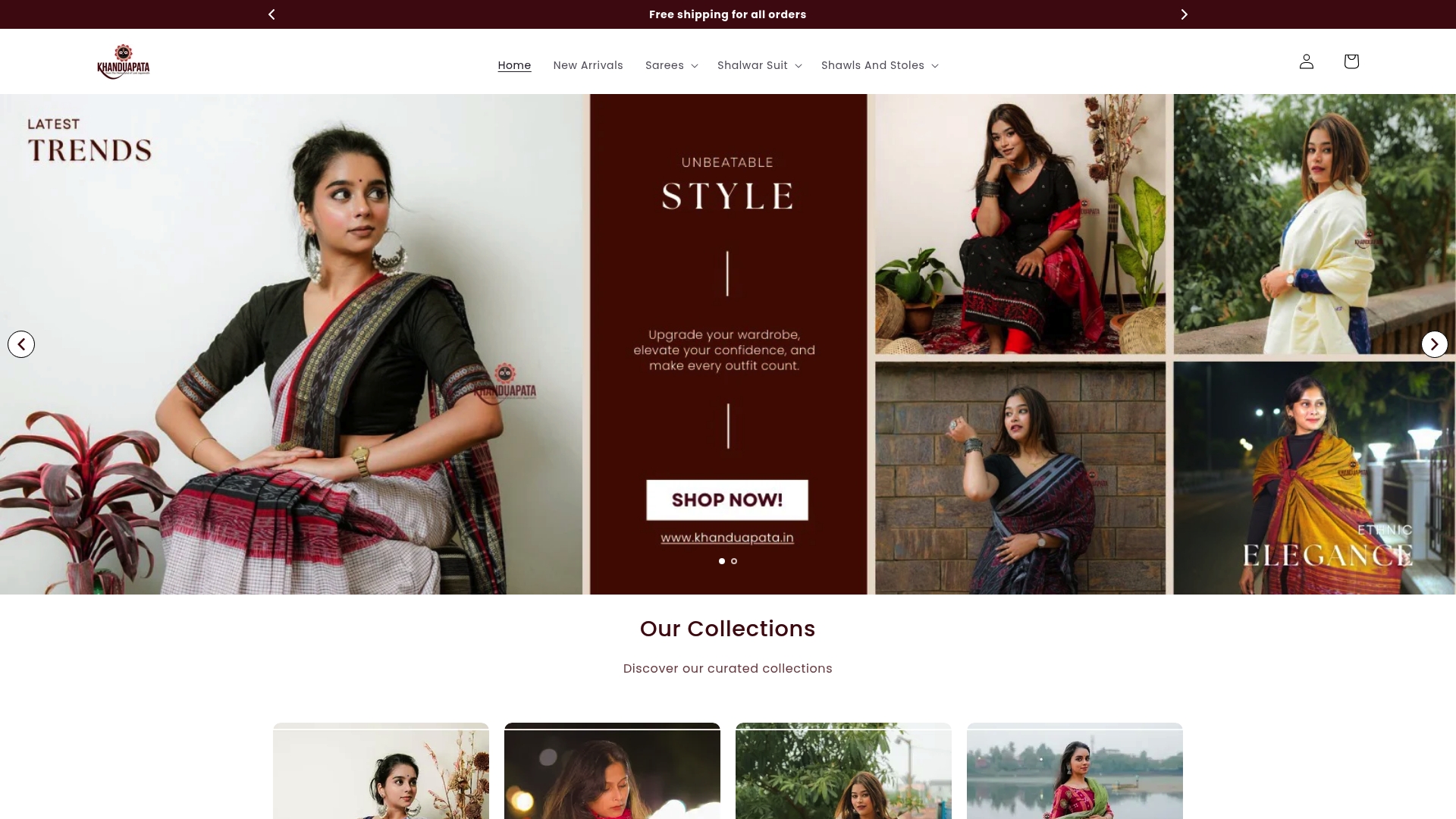
Our collection features handwoven silk sarees that showcase genuine traditional techniques supporting rural artisan communities. Each saree carries the essence of heritage while meeting contemporary tastes. Explore pieces like our floral design Chanderi silk saree or tribal design Chanderi silk saree that blend elegance with cultural authenticity. Visit Khanduapata to discover handcrafted textiles that honor tradition and support the artisans who keep these crafts alive.
Frequently asked questions
What makes a silk saree traditional?
A silk saree earns the traditional designation through handweaving on manual looms using pure mulberry silk and regional techniques passed down through generations. These sarees feature distinctive styles specific to their origin, such as Kanchipuram’s heavy zari borders or Patola’s double ikat patterns. Geographical Indication tags legally protect these regional identities, ensuring only sarees made using authentic methods in specific areas can carry certain names. The combination of pure silk, handloom production, and cultural heritage distinguishes traditional sarees from modern machine-made or synthetic alternatives.
How long does it take to weave a traditional silk saree?
Weaving a traditional silk saree takes between two days to two weeks or more depending on design complexity and techniques involved. Simple sarees with basic patterns can be completed in two to three days of focused work. Elaborate designs using the korvai technique, where borders are interlocked during weaving rather than stitched, require five to seven days. Complex double ikat sarees like Patola demand two weeks or longer because both warp and weft threads must be precisely dyed before weaving. The time investment reflects the skill and patience required to create these handwoven masterpieces.
How can I be sure a silk saree is authentic?
Authenticity verification uses Silk Mark certification, zari quality assessment, burn tests, weave interlocking, and physical weight as reliable indicators. Look for official labels like Silk Mark for pure silk content, Handloom Mark for manual weaving, and GI tags for regional authenticity. Perform the burn test by igniting a single thread, which should smell like burnt hair and leave crushable ash if it’s genuine silk. Check for korvai interlocking where borders join the body seamlessly without stitching. Genuine sarees weigh 400 to 700 grams and feel cool to the touch. Learning more about identifying authentic Indian handlooms provides additional verification techniques.
Why are traditional silk sarees more expensive than synthetic ones?
Traditional silk sarees command higher prices because they require pure mulberry silk, skilled handloom weaving, and significant time investment from trained artisans. The raw silk itself costs substantially more than synthetic polyester or art silk alternatives. Handweaving on manual looms produces limited quantities compared to powerloom mass production, making each piece relatively rare. Artisans spend years mastering complex techniques like korvai interlocking or double ikat that machines cannot replicate. The price reflects fair compensation for skilled labor, quality materials, and the preservation of cultural heritage rather than profit margins.
Can traditional silk sarees be worn for everyday occasions?
Certain traditional silk sarees work beautifully for everyday wear depending on weight and design complexity. Mysore silk sarees are specifically designed to be lightweight and comfortable for daily use while maintaining elegance. Simpler Kanchipuram or Chanderi silk sarees without heavy zari work offer versatility for office wear or casual gatherings. Reserve elaborate sarees with extensive zari, intricate patterns, and heavier weights for special occasions like weddings and festivals where their full beauty can shine. Rotating your collection between everyday and special occasion pieces helps preserve each saree while enjoying your investment regularly.