

What is khanduapata craftsmanship? A 2026 guide
Many assume all Indian handwoven textiles share the same heritage and technique, but khanduapata stands apart with its sacred origins tied to Lord Jagannath and distinctive plain-bordered designs. This ancient craft from Odisha combines feather-light silk, natural dyes, and motifs like elephants and peacocks to create textiles that honor both cultural tradition and sustainable practices. Whether you seek authentic attire for ceremonies or wish to support artisan communities, understanding khanduapata craftsmanship reveals how this textile differs from other regional weaves and why it remains vital to India’s handloom legacy today.
Table of Contents
- What Is Khanduapata Craftsmanship? Origins And Significance
- Designs, Motifs, And Natural Dyes In Khanduapata Textiles
- Comparing Khanduapata With Other Odisha Textiles: Kenduli Khandua And Sambalpuri Ikat
- How To Appreciate And Use Khanduapata Textiles Today: Cultural And Sustainable Applications
- Explore Authentic Khanduapata Textiles Online
- FAQ
Key takeaways
| Point | Details |
|---|---|
| Sacred textile tradition | Khanduapata is a handwoven silk or cotton textile from Odisha, traditionally offered to Lord Jagannath and rooted in centuries-old artisan lineage. |
| Distinctive design elements | Features plain borders, feather-light silk texture, and motifs like elephants, peacocks, Nabagunjara, and Gita Govinda verses. |
| Natural dye sustainability | Uses eco-friendly natural dyes, primarily red and orange from sal tree, supporting sustainable fashion and artisan communities. |
| Different from other ikats | Unlike Sambalpuri ikat, khanduapata showcases plain borders and lighter silk, while Kenduli Khandua serves specific temple rituals. |
| Modern cultural relevance | Blends heritage with contemporary style, ideal for religious ceremonies, bridal wear, and sustainable wardrobe choices. |
What is khanduapata craftsmanship? Origins and significance
Khanduapata craftsmanship refers to traditional handweaving of Khandua Pata, a sacred silk or cotton textile from Nuapatna and Maniabandha in Odisha, India, primarily known for offerings to Lord Jagannath. This craft emerged centuries ago when artisan families dedicated their skills to creating divine garments for temple deities, establishing a lineage that continues today. The name itself reflects this devotion, with “Khandua” deriving from the cloth’s role in religious ceremonies and “Pata” meaning woven fabric in Odia.
Artisans in Nuapatna and Maniabandha villages preserve this heritage through meticulous handloom techniques passed down through generations. Each textile requires weeks of careful preparation, from dyeing threads with natural pigments to aligning intricate motifs on the loom. The artisan legacy of handwoven fabrics ensures that every piece carries the cultural memory of Odisha’s temple traditions and the skilled hands that bring them to life.
The materials used in khanduapata craftsmanship vary to suit different purposes and budgets:
- Pure silk varieties for ceremonial and bridal wear, prized for their feather-light texture
- Cotton blends for everyday elegance and comfort in tropical climates
- Tussar silk options that offer a rustic, textured finish
- Mixed fiber textiles combining durability with traditional aesthetics
These textiles hold profound cultural significance beyond their visual appeal. Temple priests drape Lord Jagannath in khanduapata during festivals, maintaining a sacred connection between craft and devotion. Families treasure these pieces as heirlooms, passing them through generations as symbols of faith and artistic excellence. The heritage and value of handmade sarees extends beyond monetary worth, representing a living tradition that connects modern wearers to centuries of spiritual and artistic practice.
Artisan communities in Nuapatna rely on this craft for their livelihoods, creating a sustainable ecosystem where traditional knowledge supports economic stability. Young weavers learn alongside master craftspeople, ensuring techniques like precise motif placement and natural dye preparation remain intact. This intergenerational transfer of skills preserves not just a textile tradition but an entire cultural identity rooted in devotion, artistry, and community resilience.
Designs, motifs, and natural dyes in khanduapata textiles
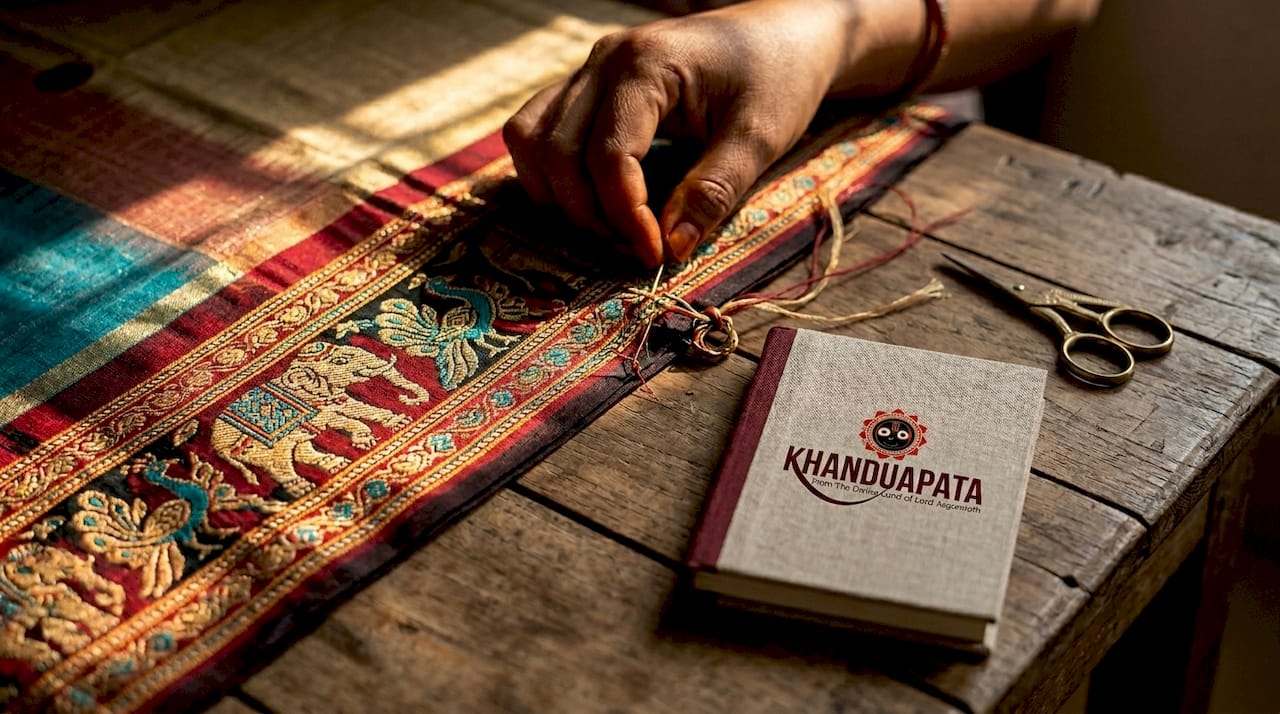
Khanduapata textiles showcase a distinctive visual language rooted in religious symbolism and natural aesthetics. Traditional colors are red and orange from natural sources like sal tree, while motifs include elephants, peacocks, Nabagunjara, lotus, temple motifs, and sometimes Gita Govinda verses. These design elements carry deep cultural meaning, transforming each textile into a narrative of faith and regional identity.
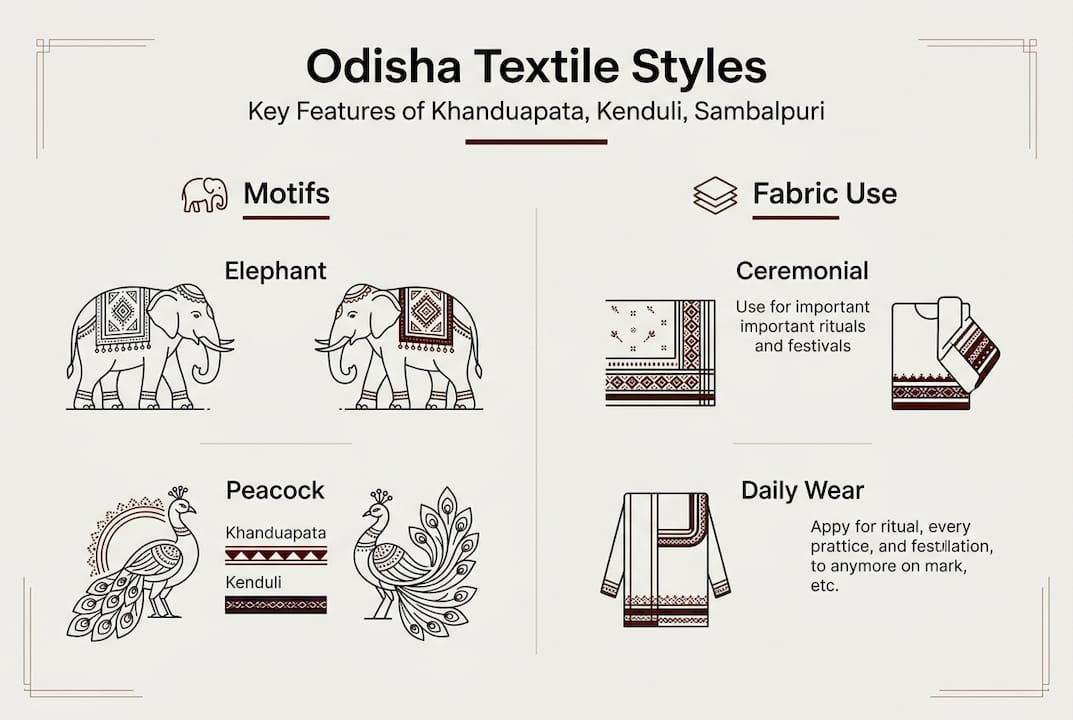
The elephant motif represents strength and Lord Ganesha’s blessings, often positioned at borders or pallu sections. Peacocks symbolize beauty and grace, their feathers rendered in intricate detail through the ikat technique. Nabagunjara, a mythical creature with nine different animal parts, appears as a unique identifier of Odisha’s artistic heritage. Lotus flowers signify purity and divine creation, while temple architecture motifs honor the sacred spaces where these textiles originated.
| Motif | Cultural symbolism | Typical placement |
|---|---|---|
| Elephant | Strength, Ganesha’s blessings, royal power | Borders, pallu |
| Peacock | Beauty, grace, divine messenger | Central field, anchal |
| Nabagunjara | Odisha’s mythical heritage, Lord Krishna’s form | Pallu, feature panels |
| Lotus | Purity, spiritual awakening, creation | All-over patterns, borders |
| Temple motifs | Sacred architecture, devotion to deities | Borders, geometric fills |
Natural dyes promote eco-friendly practices and support artisan communities in Nuapatna by reducing environmental impact and preserving traditional knowledge. Artisans extract red and orange hues from sal tree bark, creating the signature warm palette that defines khanduapata. Other natural sources include turmeric for yellows, indigo for blues, and iron-rich mud for blacks. This commitment to natural dyes and sustainability distinguishes authentic pieces from synthetic imitations flooding the market.
The dyeing process requires patience and expertise. Artisans soak threads in natural mordants to fix colors, then immerse them in dye baths for days to achieve deep, lasting shades. Sun drying between dye applications ensures color fastness without chemical stabilizers. This labor-intensive method produces textiles that age gracefully, their colors mellowing rather than fading harshly like synthetic alternatives.
Pro Tip: To distinguish authentic natural dyes from synthetic ones, examine the color’s depth and variation. Natural dyes show subtle gradations and a soft, earthy quality, while synthetic colors appear uniform and overly bright. Rub a damp white cloth on an inconspicuous area; natural dyes rarely transfer, whereas cheap synthetics may bleed.
Craftsmanship detail sets khanduapata apart from other regional textiles. Artisans achieve precise motif alignment by carefully counting threads during the ikat binding process, ensuring patterns match perfectly when woven. The plain borders, unlike the elaborate borders of Sambalpuri ikat, frame the central field with clean simplicity. This restraint highlights the motifs themselves and creates a refined aesthetic that appeals to those seeking sustainable cotton sarees with understated elegance.
Comparing khanduapata with other Odisha textiles: Kenduli khandua and Sambalpuri ikat
Odisha’s handloom tradition encompasses several distinct textile styles, each serving specific cultural functions and aesthetic preferences. Understanding these differences helps enthusiasts make informed choices and appreciate the nuances that define authentic khanduapata. Kenduli Khandua variant is 12 feet long, measuring 2 kani (hand-length units), and serves as temple lower cloth, contrasting with Sambalpuri ikat’s vibrant colors and motifs.
Kenduli Khandua represents a specialized subset of khanduapata weaving, created exclusively for religious purposes at the Jagannath temple. Its standardized length and width follow ancient measurements prescribed for draping deities during specific rituals. Artisans weave these pieces with extra care, knowing they will adorn sacred images viewed by thousands of devotees. The motifs on Kenduli Khandua often feature more restrained religious iconography compared to the decorative variety found in khanduapata meant for personal wear.
Sambalpuri ikat, while sharing the ikat technique with khanduapata, diverges significantly in color palette, motif style, and overall aesthetic. Sambalpuri weavers favor bold, vibrant hues like deep maroons, bright blues, and rich greens, creating textiles that command attention. Their motifs draw from nature and tribal art, featuring fish, flowers, and geometric patterns that differ from khanduapata’s temple-inspired designs. The borders of Sambalpuri sarees showcase elaborate patterns rather than the plain borders that characterize authentic khanduapata.
| Feature | Khanduapata | Kenduli Khandua | Sambalpuri ikat |
|---|---|---|---|
| Primary use | Ceremonial, bridal, cultural events | Temple offerings, deity draping | Festive, everyday elegance |
| Border style | Plain, unadorned | Plain, ritually prescribed | Elaborate, patterned |
| Color palette | Red, orange from natural dyes | Traditional temple colors | Vibrant, diverse hues |
| Texture | Feather-light silk | Medium weight silk or cotton | Heavier, textured silk |
| Motif themes | Elephants, peacocks, Nabagunjara, Gita Govinda | Religious symbols, restrained designs | Fish, flowers, tribal geometry |
Pro Tip: Key details to spot genuine khanduapata versus other ikat textiles include checking for plain borders, feeling for the characteristic feather-light silk texture, and examining motif alignment. Authentic khanduapata shows sharp, precise pattern matching at seams, a hallmark of skilled artisan work that mass-produced imitations cannot replicate.
Practical buying advice for enthusiasts seeking authentic pieces starts with sourcing from verified retailers who maintain direct relationships with weaving communities. Visit Odisha textile comparisons to understand regional variations and develop an eye for genuine craftsmanship. When purchasing, request information about the artisan or village of origin, as transparent sourcing indicates authenticity.
Examine the textile under natural light to assess color quality and motif sharpness. Run your fingers across the fabric to feel for the smooth, lightweight texture that defines quality khanduapata silk. Check the reverse side; authentic ikat shows color penetration through the fabric rather than surface printing. These tactile and visual checks, combined with knowledge of identifying authentic handlooms, empower buyers to invest confidently in pieces that honor tradition and support artisan livelihoods.
How to appreciate and use khanduapata textiles today: cultural and sustainable applications
Khanduapata textiles find their most meaningful expression during religious and cultural ceremonies where their sacred origins resonate with the occasion’s significance. Devotees wear these pieces to temple festivals, particularly those honoring Lord Jagannath, creating a visual connection between personal faith and ancient tradition. Brides in Odisha and beyond choose khanduapata sarees for wedding ceremonies, valuing the textiles’ association with divine blessings and cultural continuity. Cultural events celebrating regional heritage provide ideal settings for showcasing these handwoven treasures.
The sustainable fashion perspective elevates khanduapata beyond cultural artifact to contemporary ethical choice. Each handmade piece represents hours of skilled labor, natural materials, and eco-friendly processes that contrast sharply with fast fashion’s environmental toll. By choosing khanduapata, you support artisan communities whose livelihoods depend on preserving traditional techniques. The natural dyes used in authentic pieces avoid the water pollution and chemical exposure associated with synthetic textile production.
Caring for khanduapata silk and cotton textiles requires gentle handling to preserve their beauty across generations. First, avoid wearing these pieces in situations where they might snag on jewelry or rough surfaces, as the delicate silk threads can pull. Second, after each wear, air the textile in shade to release any moisture or odors without exposing it to harsh sunlight that fades natural dyes. Third, store khanduapata folded in breathable cotton bags rather than plastic, allowing air circulation that prevents mildew in humid climates. Fourth, for cleaning, choose professional dry cleaning for silk varieties or gentle hand washing with mild, pH-neutral detergents for cotton blends.
Five ways to incorporate khanduapata attire into your modern wardrobe:
- Drape a khanduapata saree with contemporary blouse designs featuring modern necklines or sleeve styles that balance traditional and current aesthetics.
- Use khanduapata stoles as statement accessories over neutral Western outfits, letting the textile’s motifs and colors elevate simple ensembles.
- Commission tailors to create fusion wear like jackets or skirts from khanduapata fabric, reinterpreting heritage textiles for everyday versatility.
- Wear khanduapata suits to professional settings where cultural attire is welcomed, showcasing regional pride while maintaining workplace appropriateness.
- Gift khanduapata pieces for milestone celebrations, sharing the craft’s cultural significance with recipients who value meaningful, sustainable presents.
Pro Tip: Authentic Khanduapata features sharp motif alignment, plain borders unlike other Odisha ikats, and feather-light silk texture. When purchasing, verify these characteristics by examining pattern precision at folds and feeling the fabric’s weight. Genuine pieces should feel almost weightless compared to heavier Sambalpuri or synthetic alternatives, while the plain borders provide immediate visual confirmation of authenticity.
The feather-light texture offers practical comfort benefits in tropical climates where heavy textiles become uncomfortable. This breathability makes khanduapata ideal for long ceremonies or celebrations where you need to look elegant without sacrificing comfort. The plain borders contribute to styling versatility, allowing the textile to pair with various blouse colors and jewelry styles without visual competition. For detailed guidance on maintaining these precious textiles, explore caring for handwoven sarees to ensure your investment remains beautiful for years.
When considering khanduapata as gifts, understand that you are sharing more than fabric. You offer recipients a piece of cultural heritage, artisan livelihood support, and sustainable fashion choice wrapped in beauty. Learn more about thoughtful presentation through gifting handwoven sarees to make your gesture even more meaningful.
Explore authentic khanduapata textiles online
Now that you understand what makes khanduapata craftsmanship special, you can explore authentic pieces that embody this heritage. Our collection features handwoven textiles created by artisan families in Nuapatna and Maniabandha, each piece reflecting the sacred tradition and natural dyeing practices you have learned about. From elegant suits perfect for cultural gatherings to exquisite sarees that honor Lord Jagannath’s legacy, every item carries the hallmarks of genuine craftsmanship.
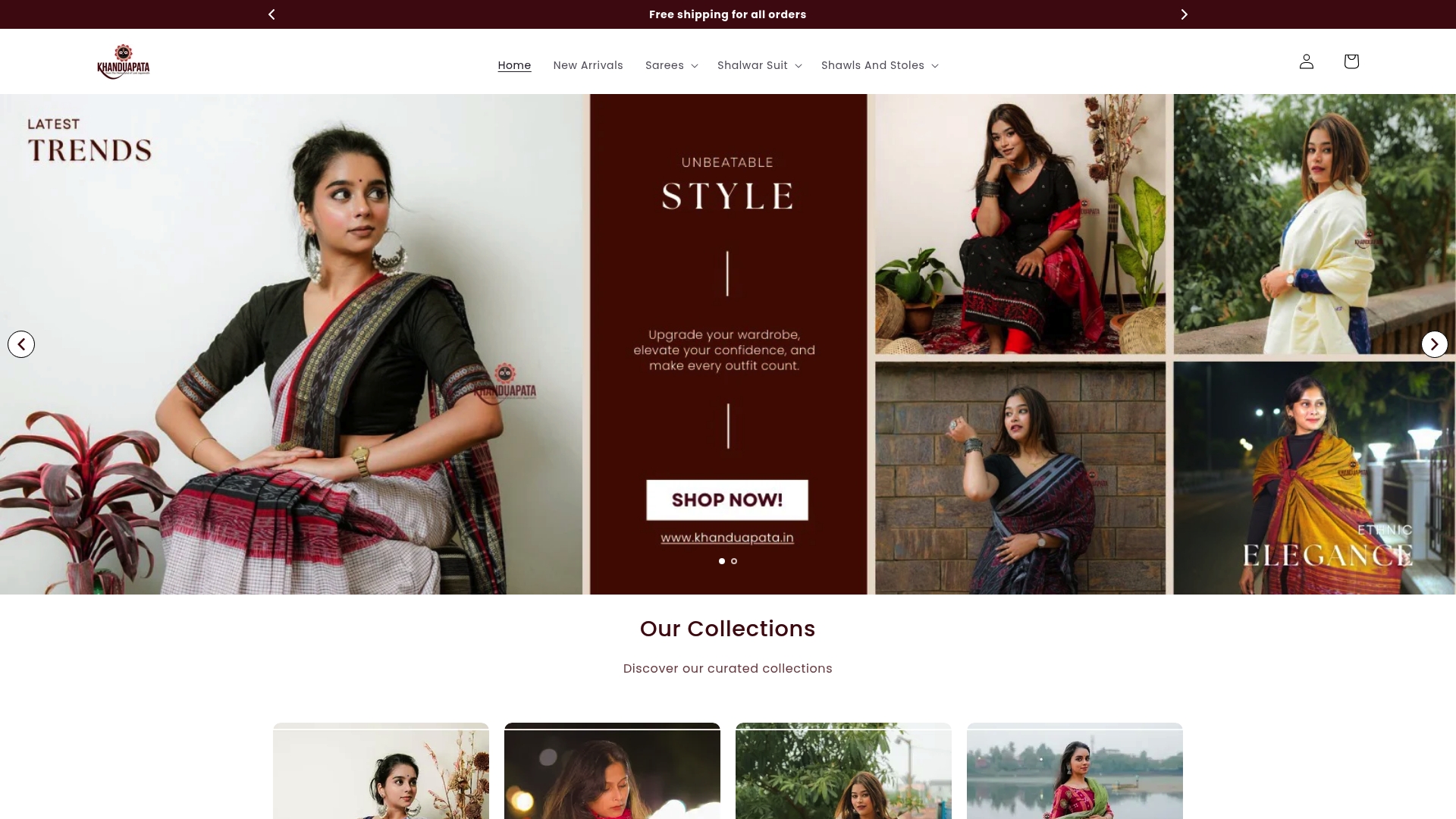
Discover these featured categories showcasing authentic khanduapata artistry:
- Maroon brown ethnic cotton suits featuring traditional motifs and natural dyes
- Maroon design unstitched suits that blend heritage with contemporary versatility
- Complete collections at Khanduapata official site where you can browse sarees, stoles, and shawls
Pro Tip: Shop with confidence by applying the authenticity indicators covered earlier. Look for product descriptions mentioning plain borders, natural dyes, and artisan village origins. Examine product images for the characteristic feather-light drape and precise motif alignment that distinguish genuine khanduapata from imitations.
FAQ
What is the typical price range for authentic khanduapata textiles?
Prices vary by material and design complexity, typically falling in the mid to premium range that reflects artisanal value and hours of skilled handwork. Pure silk khanduapata sarees with intricate motifs command higher prices than cotton blends, while simpler designs cost less than pieces featuring elaborate Gita Govinda verses or Nabagunjara motifs. Buying authentic pieces supports artisans and ensures quality that synthetic alternatives cannot match. Expect to invest more than mass-produced textiles but receive an heirloom that appreciates in cultural and monetary value over time.
How can I confirm the authenticity of a khanduapata textile?
Look for sharp motif alignment and plain borders that distinguish genuine khanduapata from other Odisha ikats and synthetic imitations. Check for the feather-light silk texture and evidence of natural dyes, which show subtle color variations rather than uniform synthetic brightness. Compare your piece with trusted sources or buy from verified retailers who maintain direct artisan relationships and provide origin documentation. For comprehensive guidance, review authentic handloom identification tips that cover visual, tactile, and sourcing verification methods.
What are the care instructions for khanduapata silk and cotton textiles?
Dry clean silk varieties or gently hand wash cotton blends with mild, pH-neutral detergents to preserve natural dyes and delicate fibers. Avoid direct sunlight when drying or storing, as UV exposure fades the organic pigments that give khanduapata its characteristic warm palette. Store folded in breathable cloth bags rather than plastic, allowing air circulation that prevents mildew in humid conditions. For detailed maintenance workflows that extend your textile’s lifespan, consult handloom saree care tips covering seasonal storage and stain treatment.
Is khanduapata suitable for modern fashion or only traditional wear?
Yes, khanduapata blends heritage with contemporary styles through fusion designs, versatile draping, and accessory applications that suit diverse occasions. The textiles work beautifully for cultural events while adapting to everyday elegance when styled with modern blouses or incorporated into Western silhouettes. This versatility suits those valuing sustainable, artisanal clothing that tells a story while remaining wearable in current fashion contexts. The feather-light texture and plain borders particularly lend themselves to contemporary interpretations that honor tradition without appearing costume-like.
