Why choose cotton sarees: elegance meets sustainability
Choosing a cotton saree means embracing fashion that honors both tradition and the planet. Organic cotton reduces water use by 60-70% compared to conventional cotton, making these handwoven treasures a smart choice for eco-conscious fashion enthusiasts. This guide explores why cotton sarees offer unmatched sustainability, comfort, and cultural value while supporting India’s artisan communities in 2026.
Table of Contents
- Introduction To Cotton Sarees And Sustainability
- Why Cotton Sarees Are A Sustainable Choice
- Supporting Artisan Livelihoods And Cultural Heritage
- Comfort And Suitability Of Cotton For Indian Climate
- Common Misconceptions About Cotton Sarees
- Comparison With Other Saree Fabrics
- Practical Tips For Purchasing And Caring For Cotton Sarees
- Conclusion: Embrace Elegance And Sustainability With Cotton Sarees
- Explore Elegant Cotton Sarees At Khanduapata
Key takeaways
| Point | Details |
|---|---|
| Sustainability advantage | Cotton sarees use organic fibers, natural dyes, and handloom weaving with zero electric carbon footprint. |
| Artisan empowerment | Purchasing cotton sarees supports 4.3 million weavers and preserves traditional Indian craftsmanship. |
| Climate comfort | Cotton’s breathability and moisture absorption make it ideal for India’s warm, humid conditions. |
| Durability and care | Proper washing and storage extend cotton saree lifespan, often outlasting synthetic fabrics. |
| Versatile elegance | Cotton sarees suit daily wear, office settings, and festive occasions with appropriate styling. |
Introduction to cotton sarees and sustainability
Cotton sarees represent one of India’s most cherished textile traditions, woven into the fabric of regional cultures from Bengal to Tamil Nadu. These garments carry centuries of artisan knowledge, passed down through generations of weaving families. In 2026, sustainability has moved from niche concern to mainstream necessity in Indian fashion.
Sustainability in fashion means minimizing environmental harm while supporting fair labor practices and preserving cultural heritage. It encompasses everything from raw material sourcing to production methods and garment longevity. Handwoven cotton sarees embody slow fashion emphasizing durability and artisan empowerment.
The slow fashion movement rejects disposable clothing culture. Instead, it celebrates quality craftsmanship, timeless designs, and meaningful connections between makers and wearers. Cotton sarees naturally align with these values through their handloom production and traditional techniques.
Emerging consumer values in 2026 reflect this shift:
- Environmental responsibility through reduced chemical use and carbon emissions
- Ethical production supporting fair wages and safe working conditions
- Cultural preservation maintaining traditional weaving techniques
- Quality over quantity investing in durable, versatile pieces
- Transparency knowing the origin and impact of purchases
These values guide conscious fashion choices. Understanding sustainable fashion trends India 2026 helps you make informed decisions that align with your principles.
Why cotton sarees are a sustainable choice
Cotton sarees offer remarkable environmental advantages compared to conventional textiles. Organic cotton reduces water use by 60-70% compared to conventional cotton and handloom weaving emits zero electricity-based carbon. These savings add up significantly across millions of sarees produced annually.
Handloom weaving requires no electric power, relying entirely on human skill and manual looms. This traditional method produces zero carbon emissions from electricity while creating employment in rural areas. Each handwoven saree represents hours of careful craftsmanship without environmental cost.
Natural dyes derived from plants, minerals, and other organic sources replace harmful synthetic chemicals. Indigo, turmeric, madder root, and pomegranate create beautiful colors without polluting waterways. These biodegradable dyes break down naturally, protecting ecosystems from toxic runoff.
Environmental benefits include:
- Biodegradable fibers that decompose naturally without releasing microplastics
- Reduced pesticide use in organic cotton farming protecting soil health
- Lower carbon footprint from manual weaving and natural processing
- Water conservation through efficient organic cultivation methods
- Chemical-free production safeguarding artisan health and local water sources
Pro Tip: Look for organic cotton certification labels when shopping. These verify that cotton was grown without synthetic pesticides or genetically modified seeds, ensuring genuine environmental benefits.
Exploring organic cotton benefits India reveals how your fashion choices create positive change. Every cotton saree purchase votes for cleaner production methods and healthier ecosystems.
Supporting artisan livelihoods and cultural heritage
Buying cotton sarees directly supports India’s vibrant artisan communities. The handloom sector employs 4.3 million weavers in India and supports traditional weaving skills tied to Indian heritage. These skilled artisans sustain families and preserve techniques passed through generations.
Rural economies depend heavily on handloom weaving for income and employment. When you purchase a handwoven cotton saree, your money flows directly to villages where artisans live and work. This economic support maintains traditional livelihoods in an era of industrial textile production.
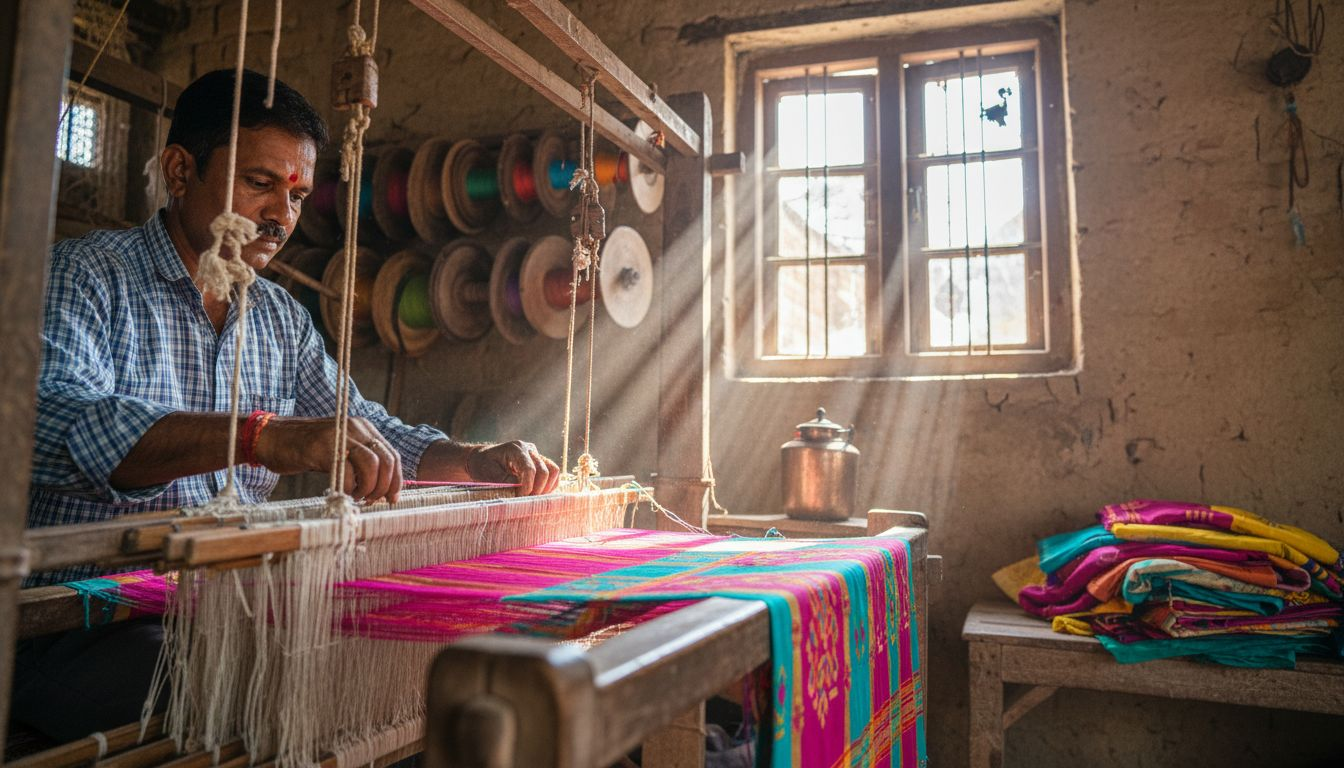
Traditional weaving skills face extinction without market demand. Each region of India developed unique patterns, techniques, and motifs over centuries. From Odisha’s intricate ikat to Bengal’s jamdani, these traditions survive only when artisans can earn sustainable incomes from their craft.
The connection between cultural heritage and sustainable fashion runs deep. Preserving traditional techniques means maintaining biodiversity in natural dyes, keeping alive indigenous knowledge systems, and honoring cultural identity. Tribal design cotton sarees showcase how ancient patterns remain relevant in contemporary fashion.
Social impact includes:
- Fair wages enabling artisans to support families and educate children
- Women’s empowerment through weaving cooperatives and entrepreneurship
- Community stability preventing migration to overcrowded cities
- Skill transmission training younger generations in traditional crafts
- Cultural pride maintaining regional identity and artistic expression
Artisan Employment Impact: 4.3 million weavers across India depend on handloom production for their primary income, with each weaver typically supporting a household of four to five family members.
Understanding artisan livelihoods India fashion helps you appreciate the human stories woven into every saree. Your purchase becomes a meaningful act of cultural preservation and economic justice.
Comfort and suitability of cotton for Indian climate
Cotton’s natural properties make it perfectly suited for India’s climate. The fiber’s breathability allows air circulation, preventing the suffocating feeling synthetic fabrics create in humid conditions. Cotton also absorbs moisture efficiently, wicking sweat away from your skin to keep you comfortable throughout the day.
India’s warm, humid climate demands fabrics that work with your body rather than against it. Cotton excels in these conditions by regulating temperature naturally. During hot months, cotton keeps you cool. In air-conditioned spaces, it provides comfortable insulation without overheating.
Practical advantages for daily life:
- Office wear comfort allowing full-day wear without irritation
- Travel convenience packing light while maintaining elegance
- Daily use versatility suitable for errands, meetings, and social visits
- Skin-friendly properties reducing rashes and allergic reactions
- Easy movement drape that allows comfortable sitting, walking, and working
Cotton sarees improve with age. Each wash makes the fabric softer and more comfortable against your skin. Unlike synthetics that degrade and become rough, quality cotton develops a luxurious hand feel over time. Plain cotton sarees for comfort demonstrate this everyday elegance.
Pro Tip: Wash new cotton sarees in cold water before first wear. This removes any residual sizing and immediately improves softness while setting natural dyes.
The combination of breathability, moisture management, and improving texture explains why cotton remains India’s most practical saree fabric. Comfort doesn’t require sacrificing style or cultural tradition.
Common misconceptions about cotton sarees
Several myths prevent people from fully appreciating cotton sarees. Understanding the truth helps you make informed choices based on facts rather than outdated assumptions.
Durability concerns top the list of misconceptions. Many believe cotton wears out quickly compared to synthetics. Reality proves otherwise: quality cotton sarees with proper care often outlast polyester and other synthetic fabrics. Cotton fibers gain strength when wet, unlike synthetics that weaken. Regular washing actually improves cotton’s texture rather than destroying it.
The formality myth suggests cotton sarees suit only casual wear. This outdated view ignores contemporary designs and styling possibilities. Cotton sarees with elegant borders, intricate weaves, and sophisticated colors work beautifully for semi-formal events, office wear, and festive occasions. The fabric itself doesn’t determine formality; design and styling do.
Sustainability often gets confused with unfashionable choices. Some assume eco-friendly means compromising on aesthetics or modernity. Cotton sarees prove this false by blending traditional craftsmanship with contemporary patterns and colors. Sustainable fashion means thoughtful production, not outdated styles.
Key myth corrections:
- Cotton durability exceeds synthetics when properly maintained and washed
- Handwoven cotton offers diverse styles from casual to elegant formal wear
- Natural dyes produce rich, sophisticated colors rivaling synthetic alternatives
- Modern cotton saree designs incorporate contemporary trends and motifs
- Sustainable fashion includes cutting-edge aesthetics and timeless elegance
Natural dyes deserve special mention. Synthetic dyes pollute waterways with heavy metals and toxic chemicals. Natural dyes biodegradable safely while creating beautiful, unique colors. Each batch varies slightly, giving your saree individuality impossible with industrial dyeing.
Recognizing these misconceptions helps you appreciate cotton sarees for their true value: durable, versatile, beautiful garments that honor tradition while meeting modern needs.
Comparison with other saree fabrics
Understanding how cotton compares to other popular saree fabrics helps you make choices aligned with your values and needs. Each fabric offers different sustainability profiles, care requirements, and style characteristics.
| Fabric | Water Usage | Carbon Footprint | Biodegradability | Artisan Impact | Durability | Style Range |
|---|---|---|---|---|---|---|
| Cotton | Low (organic) | Very Low | Fully biodegradable | High employment | Excellent with care | Casual to festive |
| Silk | Moderate | Moderate | Biodegradable | Moderate employment | Excellent | Formal to bridal |
| Linen | Low | Low | Fully biodegradable | Low employment | Excellent | Casual to semi-formal |
| Synthetic | High | Very High | Non-biodegradable | Minimal employment | Variable | All occasions |
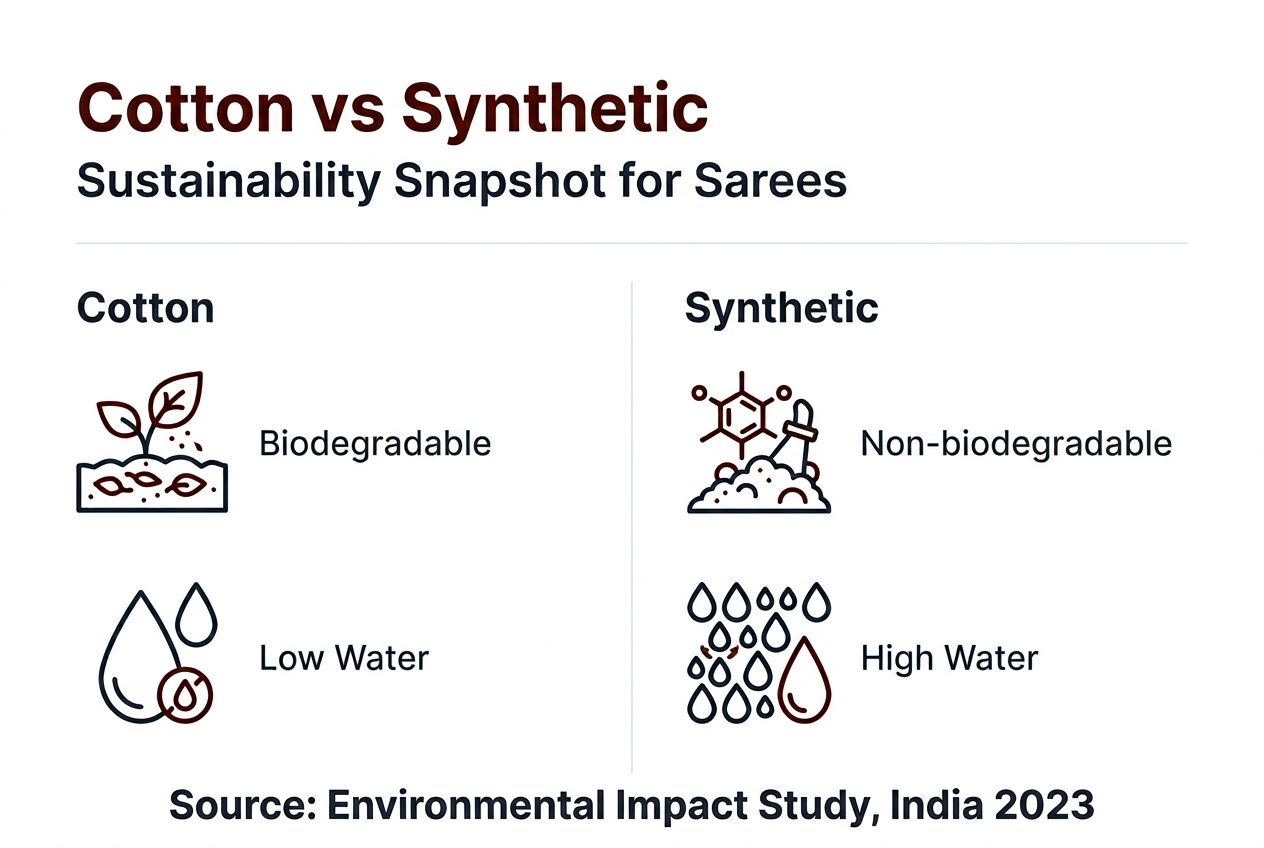
Cotton excels in overall sustainability. Organic cotton cultivation uses 60-70% less water than conventional methods. Handloom production creates zero electricity-based emissions. The fiber biodegrades completely, leaving no environmental trace.
Silk production requires more resources and involves concerns about silkworm treatment in conventional sericulture. However, silk employs significant artisan communities and produces stunning formal wear. Ahimsa silk offers a cruelty-free alternative but costs more.
Linen shares cotton’s sustainability advantages with even lower water requirements. However, linen sarees remain less common in India, offering limited style variety and less artisan employment compared to cotton’s widespread production.
Synthetic fabrics like polyester dominate fast fashion due to low costs. They create significant environmental damage through petroleum sourcing, high-energy production, and microplastic pollution. Synthetics employ few traditional artisans and support industrial manufacturing instead.
Practical considerations:
- Cotton offers the best balance of sustainability, comfort, and cultural value
- Colour check cotton sarees demonstrate style versatility
- Care requirements vary: cotton needs gentle washing, silk requires dry cleaning
- Investment value depends on usage: cotton for regular wear, silk for special occasions
Your choice depends on intended use, budget, and priorities. For everyday elegance with minimal environmental impact, cotton leads clearly. For special occasions where tradition demands, silk remains appropriate. Avoiding synthetics benefits both environment and artisan communities.
Practical tips for purchasing and caring for cotton sarees
Selecting authentic, sustainable cotton sarees requires attention to specific details. Following these guidelines ensures you invest in genuine handwoven pieces that support artisans and last for years.
Verifying authenticity:
- Examine the weave closely for slight irregularities indicating handloom work
- Check for organic cotton certifications like GOTS or India Organic
- Look for artisan collective labels or handloom marks
- Verify natural dye information through seller transparency
- Ask about weaver communities and production locations
- Feel the fabric texture: handwoven cotton has unique hand feel
- Compare prices: genuine handloom costs reflect artisan labor
Natural dyes create colors that age beautifully. Unlike synthetic dyes that fade harshly, natural dyes develop subtle patinas over time. This aging adds character rather than diminishing value. Artisan labels indicate direct support for weaving communities rather than middleman profits.
Proper care extends cotton saree life significantly:
- Wash in cold water with mild, natural detergent
- Avoid harsh chemicals and bleach that damage fibers
- Dry in shade to preserve colors and prevent fabric weakening
- Iron while slightly damp for best results
- Store folded with cotton cloth between sarees
- Rotate wearing to distribute use across your collection
- Air out monthly to prevent moisture damage
Pro Tip: Starch your cotton sarees naturally using rice water. This traditional method provides crisp drape without synthetic chemicals and adds subtle body to the fabric.
Investment considerations focus on versatility and quality. Colourful dot pattern cotton sarees offer playful elegance suitable for multiple occasions. Choose colors and patterns that coordinate with your existing wardrobe for maximum wearability.
Durable designs feature reinforced borders and quality finishing. Check border attachment and fall stitching before purchase. These details indicate overall construction quality and predict longevity.
Conclusion: embrace elegance and sustainability with cotton sarees
Cotton sarees offer unmatched sustainability through organic cultivation, handloom weaving, and natural dyes. They support 4.3 million artisan families while preserving India’s rich textile heritage. The fabric’s breathability and comfort suit Indian climates perfectly, making cotton ideal for daily wear and special occasions alike.
Choosing cotton means embracing slow fashion values: quality over quantity, tradition over trends, and conscious consumption over disposable culture. Each handwoven saree represents hours of skilled labor, cultural knowledge, and environmental responsibility. Your purchase becomes an investment in artisan livelihoods and ecological health.
In 2026, conscious fashion choices carry greater importance than ever. Cotton sarees demonstrate that sustainability doesn’t require sacrificing elegance or cultural connection. They prove tradition and environmental responsibility enhance each other naturally.
Supporting artisan communities through your wardrobe choices creates ripple effects. Fair wages enable education, healthcare, and community development. Preserving traditional skills maintains cultural diversity and indigenous knowledge. Your cotton saree becomes part of a larger story of positive change.
Embrace the elegance of handwoven cotton. Honor the artisans who create these beautiful garments. Make fashion choices that reflect your values and support a more sustainable, equitable future for Indian textile traditions.
Explore elegant cotton sarees at Khanduapata
Discover the perfect blend of tradition and sustainability in our curated collection. Khanduapata offers handwoven cotton sarees that honor our heritage while meeting your contemporary style needs. Each piece carries the legacy of Lord Jagannath’s sacred weaving traditions, crafted by skilled artisans committed to excellence.
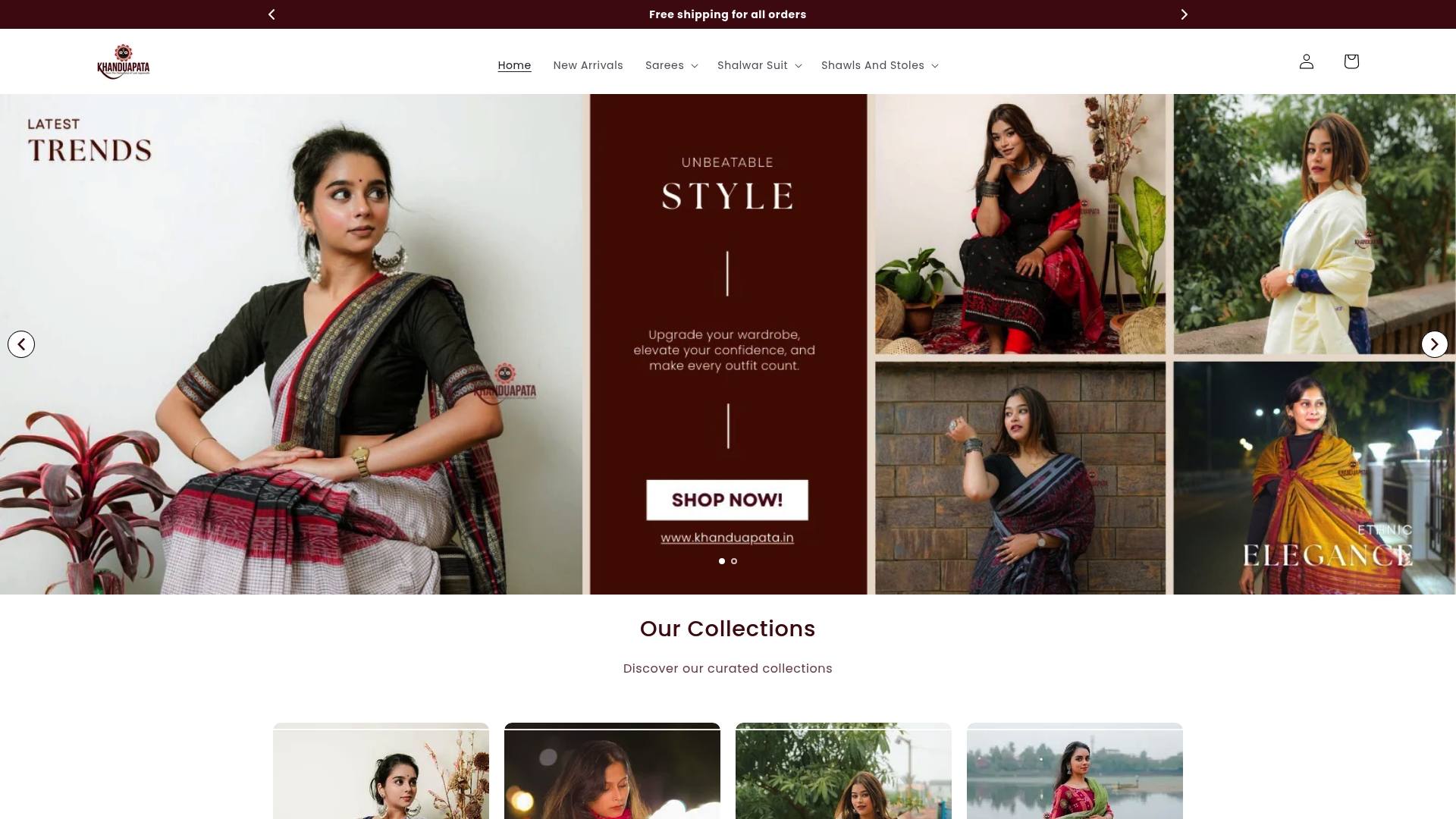
Our range includes everything from pasapali border cotton sarees with traditional Odishan patterns to tribal design cotton sarees celebrating indigenous artistry. Every saree supports artisan livelihoods and sustainable production practices. Visit Khanduapata official store to explore our complete collection and find your next treasured piece.
FAQ
Why are cotton sarees more sustainable than synthetic fabrics?
Cotton is biodegradable and comes from renewable plants, breaking down naturally without releasing microplastics. Handloom weaving for cotton produces zero electricity-based carbon emissions. Synthetics rely on petroleum extraction and cause persistent plastic pollution in waterways and soil.
How do I know if a cotton saree is truly handwoven and sustainable?
Look for organic cotton certification labels like GOTS and artisan authenticity marks. Check for natural dye indications and slight weave irregularities proving handloom production. Prefer direct artisan support channels or verified stores with transparent sourcing information.
Can cotton sarees be styled for formal or festive occasions?
Contemporary cotton saree designs blend traditional motifs with modern fashion trends beautifully. Cotton sarees with heritage-inspired borders, rich colors, and elegant draping suit semi-formal events and festive gatherings. Appropriate jewelry, blouses, and accessories elevate cotton sarees for any occasion.