

Khanduapata garments: 800 years of ritual and artistry
Most people assume historic textiles are purely decorative, beautiful objects preserved behind glass. Khanduapata garments break that assumption entirely. Woven as ritual attire for the deities at Lord Jagannath Temple, these handwoven fabrics carry a living sacred function that stretches back over eight centuries. This article traces the origins, evolution, symbolism, and modern relevance of Khanduapata, so you can understand exactly why these garments occupy a place unlike any other in Indian textile heritage.
Table of Contents
- The origins of Khanduapata: Weaving, place, and purpose
- Evolution across centuries: Rituals, verses, and artistry
- Symbolism, dyeing, and motifs: What makes Khanduapata special
- Modern relevance: Khanduapata in weddings, festivals, and sustainable fashion
- Discover and experience authentic Khanduapata today
- Frequently asked questions
Key Takeaways
| Point | Details |
|---|---|
| Ancient sacred roots | Khanduapata weaving dates back 800 years and is central to Jagannath Temple rituals. |
| Symbolic design and dyes | Natural dyes and meaningful motifs distinguish Khanduapata as both art and devotion. |
| Heritage meets modern | Now protected by GI tag, Khanduapata appeals to both tradition lovers and eco-conscious fashion buyers. |
| Motifs with meaning | Every Khanduapata motif tells a story, with bridal variants prized for their symbolism. |
| Living tradition | From temple offerings to sustainable fashion, the legacy of Khanduapata remains vibrant and relevant. |
The origins of Khanduapata: Weaving, place, and purpose
Every great textile tradition has a geography, and Khanduapata’s is deeply specific. Khandua Pata originates from the weaving villages of Nuapatna and Maniabandha in Cuttack district, Odisha. These two towns sit along the Mahanadi river basin, where generations of weavers developed their craft in close connection with the Jagannath Temple at Puri. The geography was never accidental. Proximity to the temple meant proximity to purpose.
The word “Khandua” itself comes from “Khanda,” meaning a piece or portion. For devotees, this etymology carries weight. The garment is not just cloth. It is a dedicated portion of human skill offered to the divine. This naming tradition reflects how deeply the act of weaving was understood as a form of worship rather than mere production.
The weaving legacy spans over 800 years, making Khanduapata one of India’s oldest continuously practiced handloom traditions. What keeps it alive is not nostalgia alone. The temple rituals at Puri still require specific Khandua fabrics for dressing the deities during festivals and daily ceremonies. That ongoing demand has preserved both the craft and the community of weavers who practice it.
Explore the Khandua saree origins to understand how this regional tradition became a nationally recognized textile form.
“Khanduapata is not simply a weaving style. It is a devotional act made tangible through thread, loom, and intention.”
| Feature | Detail |
|---|---|
| Origin region | Nuapatna and Maniabandha, Cuttack, Odisha |
| Primary purpose | Ritual attire for Lord Jagannath Temple |
| Age of tradition | Over 800 years |
| Etymology | From ‘Khanda’ meaning a piece or portion |
| Weaving technique | Handloom, extra weft patterning |
Evolution across centuries: Rituals, verses, and artistry
Once we understand the Khanduapata’s early context, it’s fascinating to explore how this tradition deepened and diversified across centuries. The single most significant moment in its evolution came in the 12th century. That is when Jayadeva’s Gita Govinda verses were first woven directly into Khandua fabrics created for Lord Jagannath. Poetry became textile. Devotion became design.
This fusion of literature and weaving was not decorative experimentation. It was a theological statement. The Gita Govinda, a Sanskrit poem celebrating the love between Radha and Krishna, was considered so sacred that embedding its verses into the deity’s garments was seen as a continuous act of prayer. The loom became an altar.
A particularly specialized variant worth knowing is the Kenduli Khandua. This is a special 12-foot cloth woven specifically as the lower garment for Lord Jagannath during certain rituals. Its dimensions and construction follow strict traditional specifications. No shortcuts, no substitutions. This level of precision shows how seriously the weaving community took its sacred responsibility.
Understanding Khanduapata craftsmanship reveals how these exacting standards were maintained across generations without written manuals, passed entirely through hands-on apprenticeship.
Key milestones in Khanduapata’s evolution:
- Pre-12th century: Ritual garments woven for temple use in Nuapatna and Maniabandha
- 12th century: Jayadeva’s Gita Govinda verses integrated into fabric design
- Medieval period: Specialized variants like Kenduli Khandua developed for specific rituals
- Colonial era: Weaving communities maintained tradition despite economic disruption
- Post-independence: Government recognition and handloom revival programs supported artisans
- Modern era: GI tag awarded, global interest in heritage textiles grows
| Period | Historical use | Modern use |
|---|---|---|
| Medieval | Exclusively temple ritual attire | Still used in temple rituals |
| 12th century onward | Gita Govinda verses woven in | Motifs adapted for fashion wear |
| Kenduli Khandua | 12-foot deity lower cloth | Preserved as ceremonial specialty |
| Bridal tradition | Reserved for royal and devout families | Widely used as wedding sarees |
Pro Tip: If you are buying a Khanduapata saree for a wedding or festival, ask specifically about the motif source. Pieces with Gita Govinda-inspired patterns carry the deepest historical lineage and make the most meaningful gifts. Learn more about saree craftsmanship explained before you shop.
Symbolism, dyeing, and motifs: What makes Khanduapata special
Beyond ritual and history, Khanduapata’s distinctive colors and motifs invite a closer look at their artistic and symbolic power. The color palette is not chosen for aesthetics alone. Natural dyes give each color a specific symbolic meaning, with red and orange representing ethical values and each shade connecting to a particular deity in the Jagannath tradition.
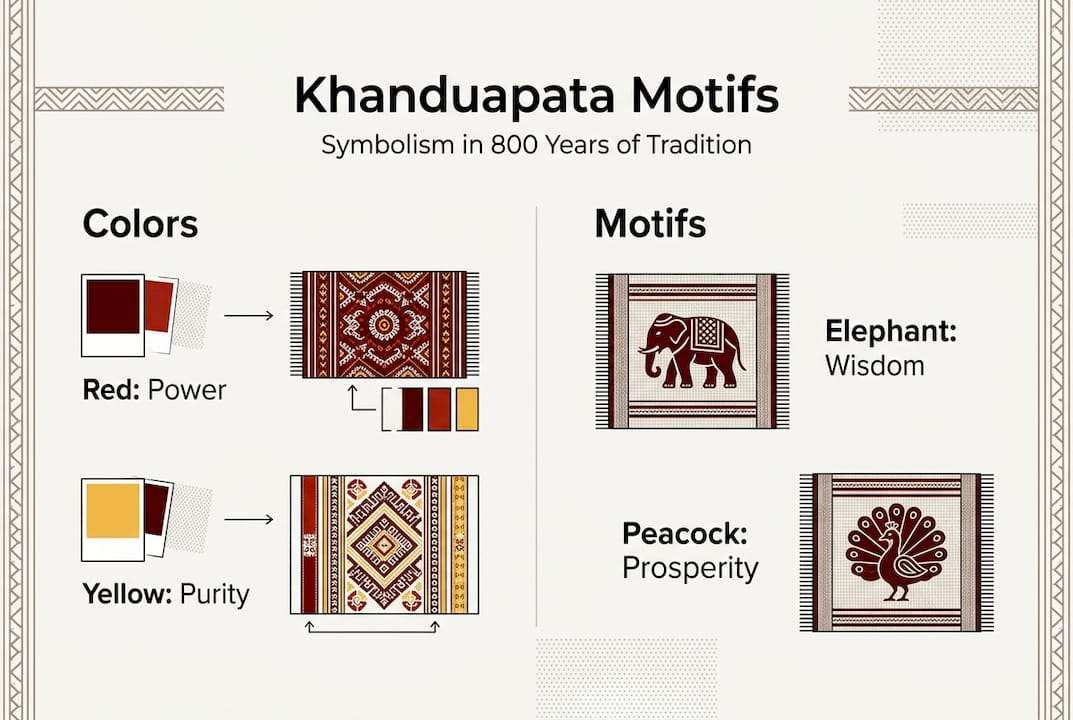
Red is associated with Subhadra and signifies power and devotion. Yellow connects to Lord Jagannath himself and represents salvation. Green belongs to Balabhadra and evokes life and renewal. When you wear a Khanduapata saree, you are wearing a color theology that has been consistent for centuries. That is a rare thing in any textile tradition.
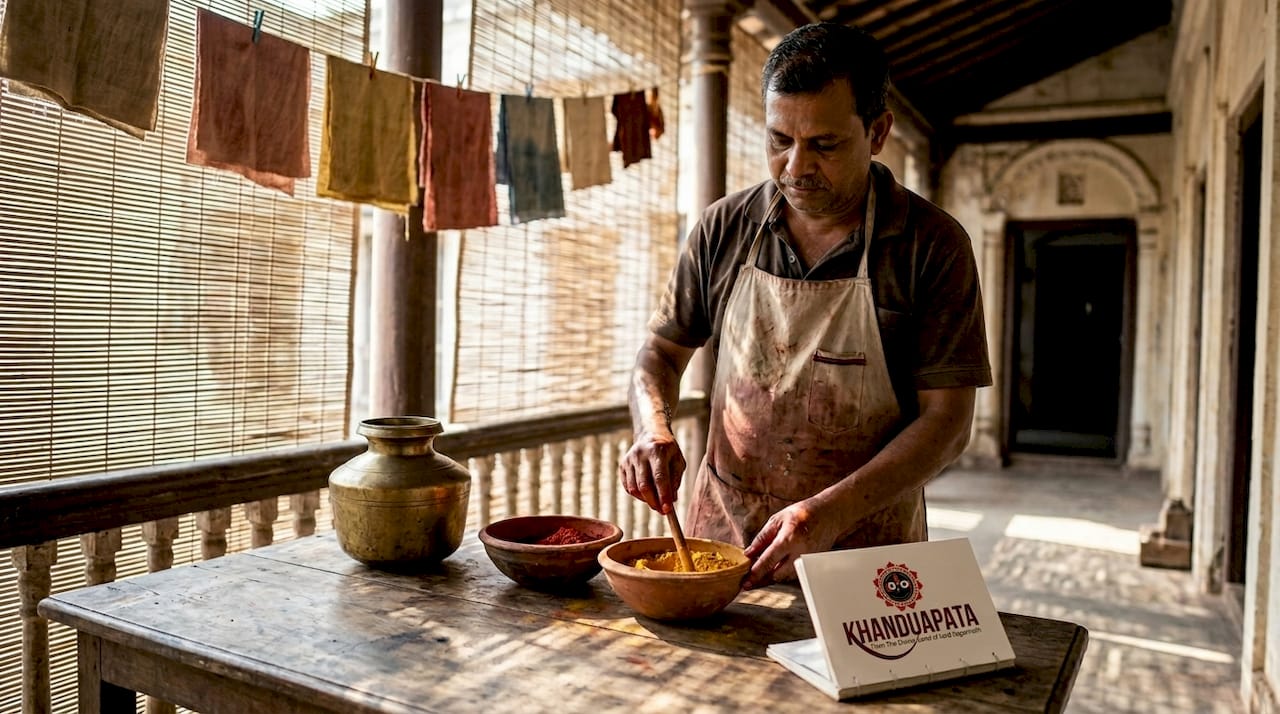
The dyeing process itself reflects eco-conscious values that feel remarkably current. Traditional Khanduapata uses dyes derived from natural sources including the sal tree, turmeric, and indigo plants. No synthetic chemicals, no petroleum-based pigments. The fabric breathes, ages gracefully, and leaves a lighter environmental footprint than most modern textiles.
The motif vocabulary is equally rich. Common designs include elephants (symbolizing Buddha and wisdom), peacocks (representing beauty and devotion), the Nabagunjara (a mythical composite creature from Odia folklore), lotus flowers, temple spires, stars, deer, and parrots. Each motif tells a story that a knowledgeable wearer can read like a visual text.
For bridal and festive occasions, the Nabakothi and Nabarangi variants are especially prized. Nabakothi features nine distinct design compartments, while Nabarangi incorporates nine colors. Both are considered auspicious and are deeply connected to the Jagannath tradition. Explore Khanduapata design elements to see how these motifs translate into wearable art.
Common Khanduapata motifs and their meanings:
- Elephant: Wisdom, strength, and Buddhist symbolism
- Peacock: Beauty, devotion, and divine grace
- Nabagunjara: Odia mythological composite creature, symbol of cosmic unity
- Lotus: Purity and spiritual awakening
- Temple spire: Sacred architecture and devotion to Jagannath
- Deer: Gentleness and the natural world
- Parrot: Love, communication, and the Gita Govinda tradition
- Stars: Celestial blessings and auspiciousness
Knowing how to identify authentic Indian handlooms helps you distinguish genuine Khanduapata from machine-made imitations that copy the visual style without the cultural substance.
Modern relevance: Khanduapata in weddings, festivals, and sustainable fashion
With the traditions and techniques freshly detailed, it’s clear that Khanduapata’s influence is still growing, especially in symbolic events and modern sustainable lifestyles. Today, the Nabakothi saree is one of the most sought-after bridal garments in Odisha. Its nine-compartment design is considered deeply auspicious for weddings, and its cultural significance at ceremonies embodies the devotion and identity of Odisha’s Jagannath tradition.
Beyond Odisha, pan-Indian eco-fashion advocates are discovering Khanduapata for its natural dyes, handloom construction, and traceable artisan origins. These are exactly the qualities that conscious consumers prioritize. A garment you can trace from loom to wardrobe, made without synthetic chemicals, by a weaver whose family has practiced the craft for generations. That story is increasingly rare and increasingly valued.
The GI tag awarded to Khandua Saree and Fabrics provides legal protection against imitation and guarantees geographic authenticity. This recognition matters enormously for buyers who want to support genuine artisans rather than factory replicas.
Pro Tip: When gifting a Khanduapata saree for a wedding or festival, choose a piece with documented artisan provenance. The GI tag is your assurance of authenticity, and it adds meaningful context to the gift itself.
Why Khanduapata resonates with modern buyers:
- Natural dyes align with eco-conscious and zero-chemical fashion values
- Handloom construction supports fair labor and artisan livelihoods
- GI tag guarantees geographic and cultural authenticity
- Motif-rich designs offer visual storytelling that mass-produced textiles cannot replicate
- Bridal and festival use keeps the tradition alive across generations
- Growing Odia diaspora demand sustains global market interest
For guidance on choosing the right piece for your occasion, the traditional saree selection guide walks you through fabric weight, motif choice, and occasion matching. You can also explore handwoven cotton dress fabrics to understand how Khanduapata fits within the broader handloom cotton tradition.
Discover and experience authentic Khanduapata today
Reading about Khanduapata’s 800-year legacy is one thing. Wearing it is another experience entirely. At Khanduapata, our family has been part of this weaving tradition for generations, and every piece in our collection carries that lineage forward. We work directly with artisans from Nuapatna and Maniabandha to bring you garments that are genuinely handwoven, naturally dyed, and culturally authentic.
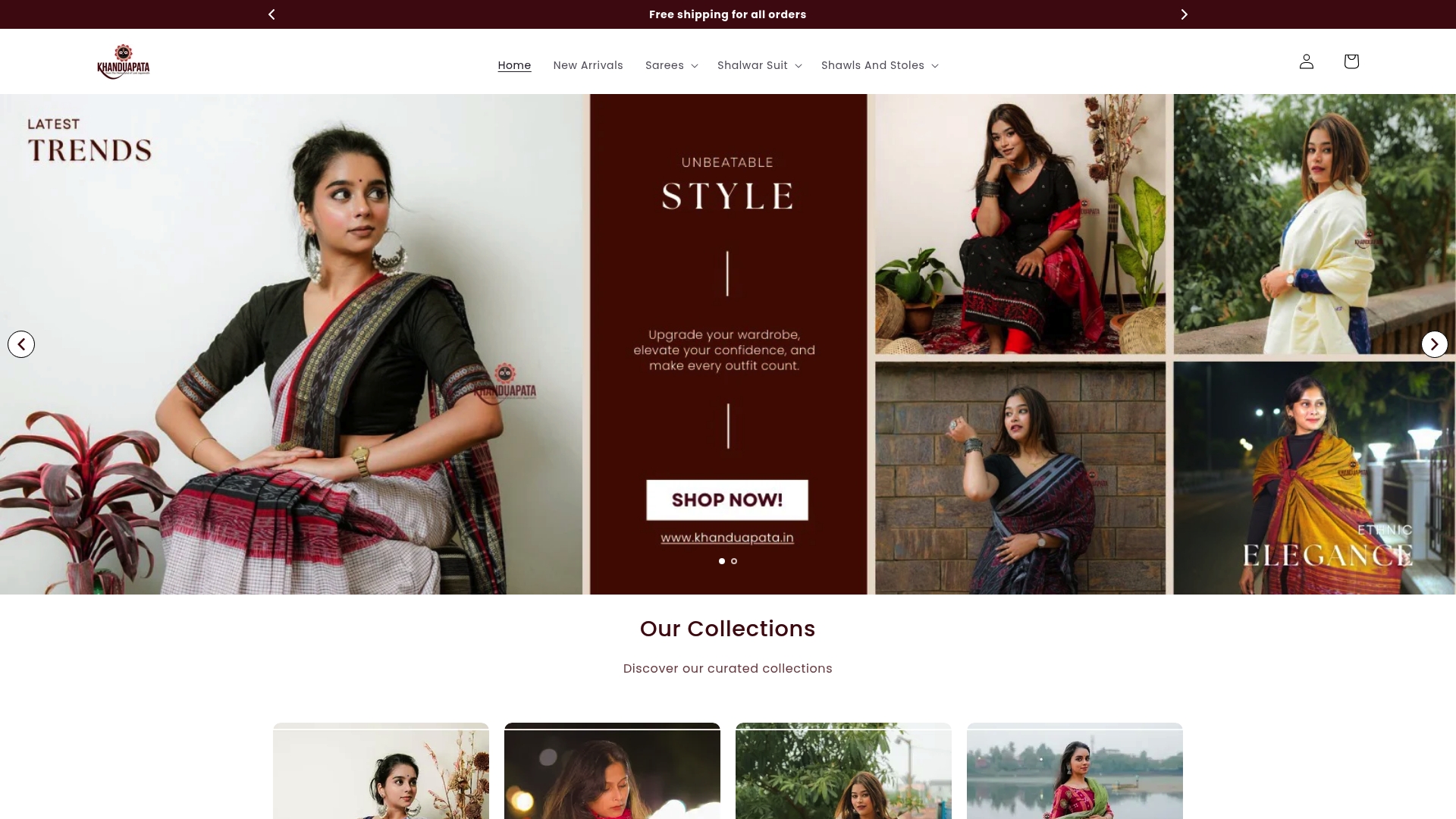
Whether you are drawn to the sacred symbolism, the eco-conscious craftsmanship, or simply the beauty of a well-made handloom saree, our collection has something that speaks to your values. The aesthetic plant design cotton saree brings nature-inspired motifs into everyday elegance, while the deep red cotton saree honors the traditional color symbolism of the Khanduapata heritage. Browse the full Khanduapata collection and find the piece that connects you to this living tradition.
Frequently asked questions
What makes Khanduapata garments unique compared to other Indian handlooms?
Unlike most Indian handlooms, Khandua Pata is made for temple rituals and features motif-rich designs rooted in devotional symbolism, giving it a sacred function that purely decorative textiles do not carry.
Why are certain colors used in Khanduapata sarees?
Each color is symbolic: red represents Subhadra, yellow represents Lord Jagannath, and green represents Balabhadra, with all shades traditionally derived from natural plant-based dye sources.
Is Khanduapata still relevant in contemporary sustainable fashion?
Absolutely. Its GI tag for heritage authenticity and natural dyeing practices make it a strong fit for eco-minded buyers who want traceable, chemical-free, handloom garments.
Who traditionally wears Khanduapata garments?
Khandua Pata is used as ritual attire for deities, bridal sarees for weddings, and festival garments for devotees, with growing adoption among heritage fashion enthusiasts worldwide.
