

Shalwar suits: tradition, style, and shopping guide
A shalwar suit is far more than daily wear. Across South Asia, it represents centuries of cultural identity, regional artistry, and practical design. Many people outside the region associate it only with casual use, but the reality is more layered. This article covers what a shalwar suit is, its cultural roots, the main types, and how to choose one. Whether you are new to traditional Indian attire or looking to make a more informed purchase, the following sections provide clear, factual guidance.
Table of Contents
- What is a shalwar suit?
- Structure and main features
- Historical and cultural evolution
- Types and regional variations
- Choosing and styling your shalwar suit
- Why shalwar suits remain timeless in Indian fashion
- Explore authentic shalwar suits and traditional attire
- Frequently asked questions
Key Takeaways
| Point | Details |
|---|---|
| Traditional attire explained | A shalwar suit combines trousers, tunic, and scarf, worn widely in India, Pakistan, and Afghanistan. |
| Design prioritizes comfort | Loose fit and breathable fabrics make shalwar suits ideal for daily and formal occasions. |
| Regional variations matter | Different styles reflect local culture, from Patiala pleats to Anarkali flares. |
| Choosing an authentic suit | Look for quality fabric, cultural embroidery, and the right regional style for your preference. |
| Timeless appeal | Shalwar suits remain fashionable by blending tradition with evolving contemporary trends. |
What is a shalwar suit?
A shalwar suit is a two or three piece outfit worn widely across South Asia. It is also called shalwar kameez, salwar suit, or Punjabi suit, and appears in everyday and formal contexts alike. The outfit is recognized as the national dress of Pakistan and is standard attire in India, Bangladesh, Afghanistan, and neighboring countries.
The three core components are:
- Shalwar: Loose trousers, typically gathered at the waist and tapered toward the ankles
- Kameez: A long tunic worn over the shalwar, ranging from knee to ankle length
- Dupatta: A long scarf worn over the shoulders or head, often matched to the suit fabric
These three pieces work together as a coordinated set. The dupatta is optional in some modern styles but remains standard in traditional and formal versions.
The outfit is worn by both men and women, though women’s versions tend to feature more embroidery, prints, and color variation. Men’s versions are typically plainer and cut differently at the collar and hem.
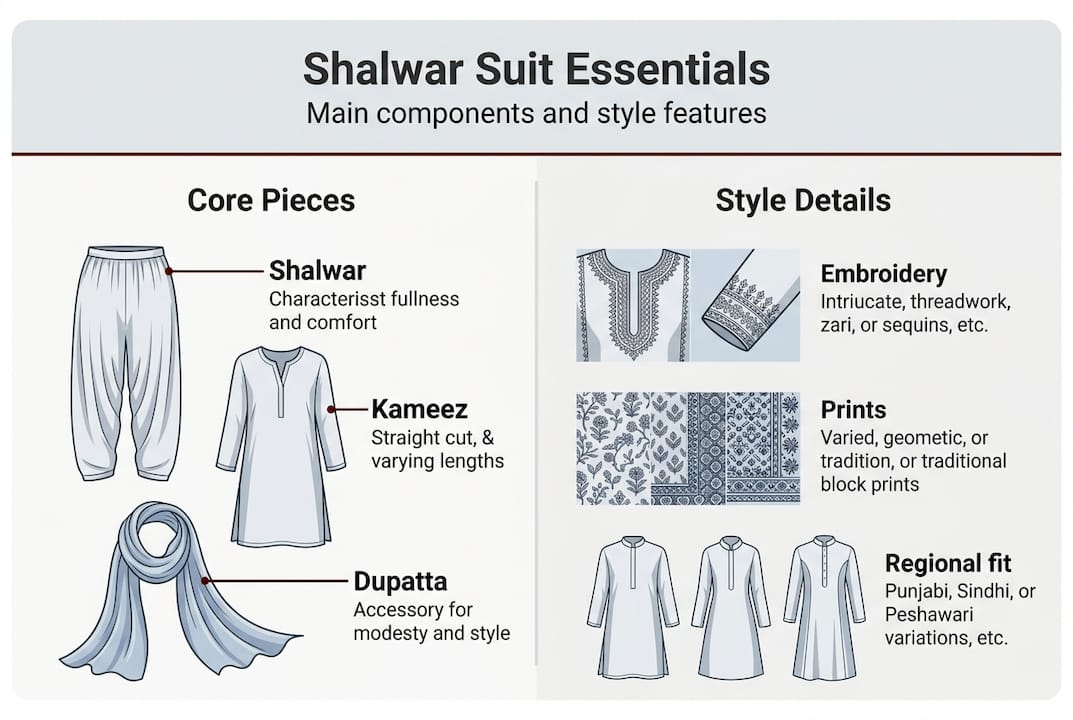
You can find a wide range of styles at a traditional attire shop that carries handwoven and regionally inspired options. The variety of cuts, fabrics, and prints available reflects how broadly this garment is used across different communities and occasions.
Key fact: The shalwar suit is recognized across south asian outfits as one of the most widely worn garments in the world, spanning multiple countries and hundreds of millions of wearers.
Structure and main features
Each piece in a shalwar suit has a specific function. The shalwar, kameez, and dupatta are each shaped for movement and modesty, making the outfit practical across climates and activities.
Shalwar: The trousers are cut wide at the top with pleats or gathers at the waist. They taper toward the ankle. This design allows full range of motion and suits both sitting and standing postures common in South Asian daily life.
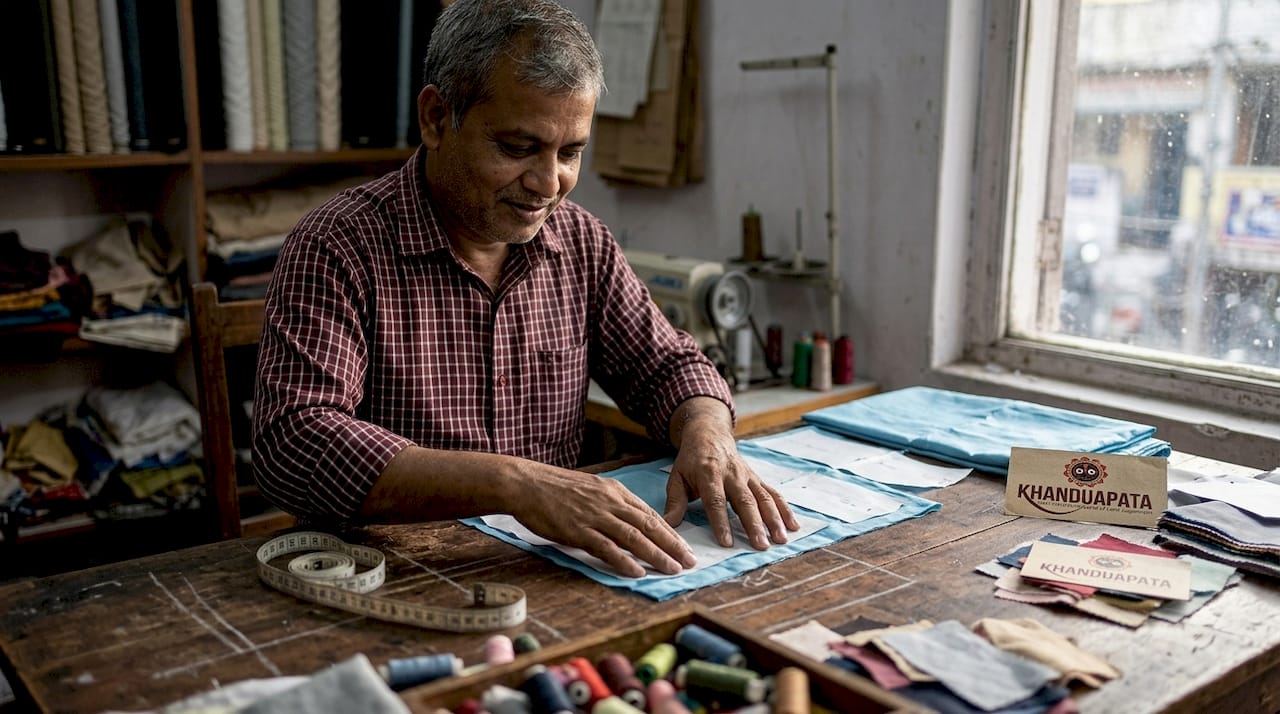
Kameez: The tunic falls to at least the knee and often lower. Side slits at the hem allow freedom of movement. Necklines, sleeve lengths, and hem shapes vary by region and occasion.
Dupatta: The scarf is typically 2 to 2.5 meters long. It can be draped over both shoulders, pinned at the chest, or worn over the head. It serves both a modesty function and a styling role.
Here is a comparison of the shalwar suit against two related styles:
| Feature | Shalwar suit | Churidar | Straight pants suit |
|---|---|---|---|
| Trouser fit | Loose, pleated | Tight, bunched at ankle | Straight, fitted |
| Comfort level | High | Moderate | Moderate |
| Occasion | Daily to formal | Semi-formal to formal | Casual to formal |
| Regional origin | Pan South Asian | North India | Modern/urban |
For a practical look at how ethnic design integrates with structure, see the maroon brown ethnic suit details or the maroon mustard flower suit for print-based variations.
Pro Tip: When selecting an unstitched suit, check the fabric weight. Lighter cotton works better for warm climates and daily wear, while heavier weaves suit cooler seasons and formal occasions.
Historical and cultural evolution
The shalwar suit has a documented history spanning several centuries. Understanding its origins helps explain why it remains so central to South Asian identity.
- 13th century: Introduced by Muslims from Central Asia, the garment spread through trade and migration into the Indian subcontinent.
- Mughal period: The outfit became formalized in court dress, with embroidery and fine fabrics marking social status.
- Colonial era: Regional variations developed as local artisans adapted the cut and fabric to local materials and customs.
- Post-independence: Pakistan adopted it as national dress. In India, it became standard attire in Punjab and spread to other states.
- Modern period: Global fashion has influenced cuts and fabrics, but the core structure remains unchanged.
The suit carries social and religious meaning in many communities. It is worn at weddings, religious festivals, and formal gatherings. In rural areas, it marks everyday identity. In urban settings, it bridges traditional and contemporary dress codes.
“The shalwar suit’s longevity comes from its adaptability. It fits formal ceremonies and daily routines equally well, which few garments in any tradition can claim.”
Regional design traditions are visible in products like the regional ethnic suit designs, which reflect specific weaving and print traditions tied to geographic areas.
Types and regional variations
The shalwar suit is not a single style. Variations include Patiala, Bahawalpuri, Multani, Anarkali, and Farshi styles, each with distinctive fabric cuts and pleating methods tied to specific regions.
| Style | Region | Key feature |
|---|---|---|
| Patiala | Punjab, India | Heavy pleating, up to 4 meters of fabric |
| Anarkali | North India/Pakistan | Flared kameez, fitted bodice |
| Bahawalpuri | Bahawalpur, Pakistan | Bold embroidery, bright colors |
| Multani | Multan, Pakistan | Mirror work, geometric prints |
| Farshi | Lucknow, India | Floor-length, trailing hem |
Each style reflects the local culture that produced it:
- Patiala suits use extra fabric for volume, making them visually bold and physically comfortable
- Anarkali suits draw from Mughal court aesthetics, with a silhouette that suits formal occasions
- Bahawalpuri and Multani styles use regional embroidery techniques passed down through artisan families
- Farshi suits are ceremonial, designed for slow movement and formal presentation
Modern designers blend these regional features. A suit may use Patiala pleating with Multani embroidery, creating hybrid styles that still reference specific traditions.
For regionally inspired cotton options, the pot design cotton suits and small flower design shalwar suits show how traditional motifs translate into contemporary unstitched fabric.
Choosing and styling your shalwar suit
Selecting the right shalwar suit depends on fabric, occasion, and fit. Here is a step-by-step process for choosing an unstitched suit:
- Identify the occasion. Daily wear calls for lighter cotton. Festive or formal occasions suit heavier fabrics with embroidery or silk elements.
- Choose the fabric. Cotton suits daily wear while silk suits formal occasions; embroidery can carry cultural symbolism specific to a region or community.
- Check the fabric width and length. Unstitched suits come as fabric lengths. Confirm the measurements are sufficient for your size before purchasing.
- Select a regional style. Decide whether you want Patiala pleating, a straight cut, or an Anarkali flare based on your body type and preference.
- Plan the tailoring. A skilled tailor familiar with shalwar suit construction will make a significant difference in fit and finish.
Styling tips by occasion:
- Daily wear: Plain or small-print cotton, minimal embroidery, neutral colors
- Festive wear: Bright colors, regional embroidery, paired with a matching dupatta
- Formal events: Silk or heavy cotton, detailed embroidery, structured kameez cut
Pro Tip: Look for authentic regional embroidery rather than machine-printed imitations. Hand embroidery has irregular spacing and texture that machine work cannot replicate. It also holds cultural value that printed patterns do not carry.
For embroidery-focused options, the embroidery cotton suit options and olive green flower suit offer examples of how embroidery integrates with fabric design.
Why shalwar suits remain timeless in Indian fashion
The common assumption is that traditional garments survive because of nostalgia. That is not the full picture. The shalwar suit persists because it solves real problems that modern fashion often ignores.
The suit emphasizes comfort, modesty, and freedom of movement, with modern evolutions adapting to contemporary tastes without losing core function. That combination is rare. Most garments optimize for one quality at the expense of others.
The contrarian view worth considering: the shalwar suit is not traditional attire that has survived modernity. It is adaptive attire that has absorbed modernity while keeping its structure intact. Designers add new cuts, new fabrics, and new prints, but the three-piece format and the functional logic behind it remain unchanged.
For buyers, this means the garment you purchase today connects to a design tradition with centuries of refinement behind it. That is not nostalgia. That is accumulated knowledge about how clothing should function.
For timeless ethnic suit examples, look for pieces that use regional motifs with quality fabric rather than trend-driven prints.
Pro Tip: Mix one traditional element, such as regional embroidery or a classic print, with a contemporary cut to create a personal style that is both current and culturally grounded.
Explore authentic shalwar suits and traditional attire
Khanduapata carries a range of handwoven unstitched shalwar suits that reflect regional Indian textile traditions. Each piece is crafted with attention to fabric quality and design authenticity.
The maroon brown ethnic cotton suit and the maroon mustard flower suit are examples of the unstitched cotton options available. Both reflect traditional motifs in a format ready for tailoring. The complete traditional attire collection includes additional styles across fabric types and regional designs. Each purchase supports handweaving artisans and preserves craft traditions tied to Indian cultural heritage.
Frequently asked questions
Are shalwar suits worn by men or women?
Shalwar suits are worn by both men and women in South Asia, though women’s versions typically include more embroidery, color variation, and a dupatta.
What is the main difference between a shalwar suit and a churidar?
A shalwar features loose, pleated trousers, while a churidar uses tighter, fitted pants that gather in folds at the ankle, creating a different silhouette and fit.
How do I choose an unstitched shalwar suit for daily wear?
Select a cotton fabric with simple styling and a comfortable cut. Avoid heavy embroidery or silk for everyday use, as these are better suited to formal occasions.
What makes Patiala salwar suits unique?
Patiala salwar suits use up to 4 meters of fabric for extra pleating, producing a distinctively full, baggy silhouette that is both visually bold and highly comfortable.
